This post contains affiliate links.
Our easy Pie Crust recipe makes the most flakey, tender, and flavorful crust, thanks to butter, shortening, flour and salt. The recipe makes two crusts, so you can make a double-crust pie or save one for another day.
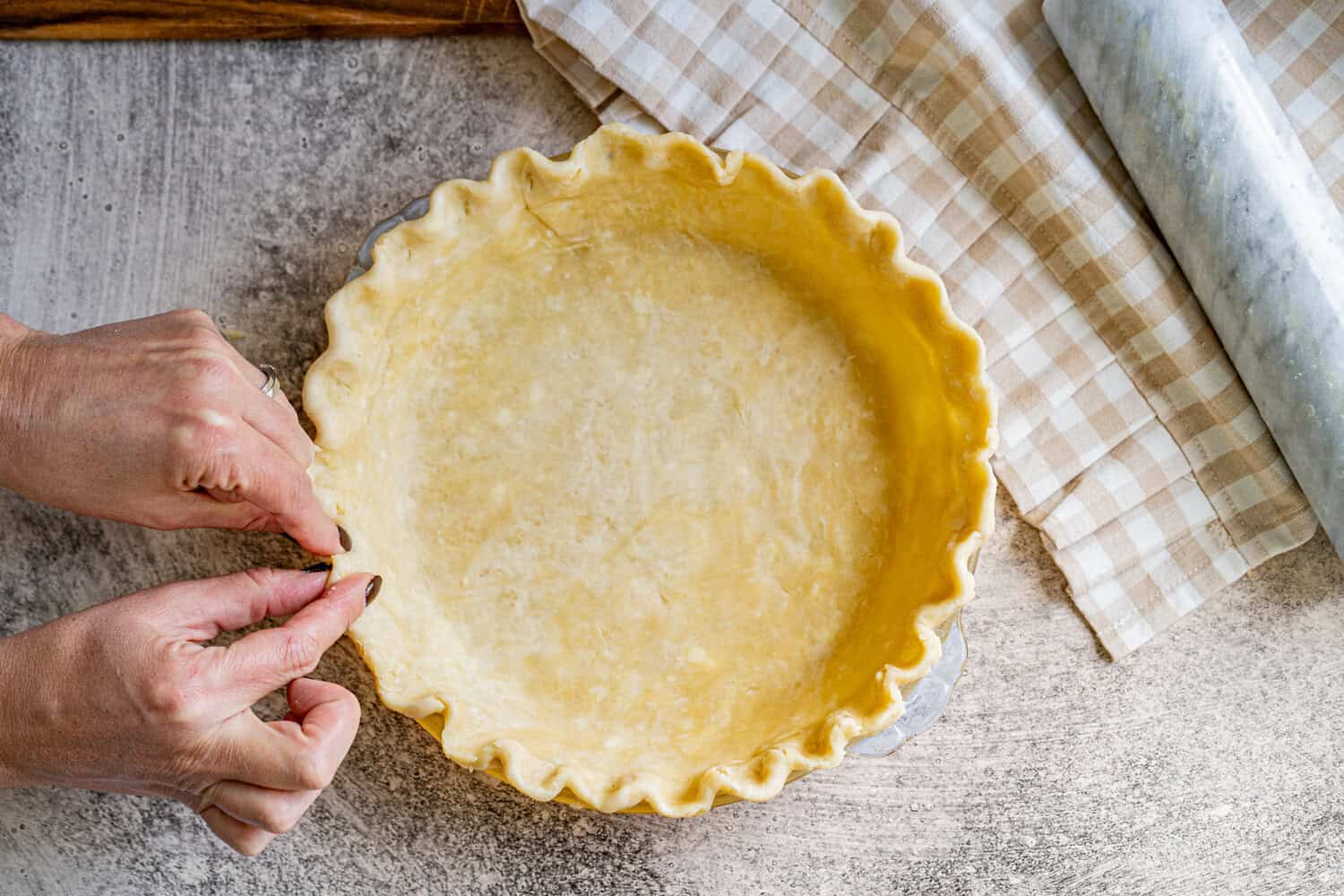
Homemade Pie Crust is easy and inexpensive!
If you are going to make anything from scratch, homemade pie crust is the right choice! You only need 4 ingredients, and it takes just a few minutes of time. I’ve been making homemade pies for decades (since I was a pre-teen!) and I have several tips for a fail-proof pie crust.
Why use butter and shortening in pie crust? After years of making pie, I’m convinced the best crust uses both butter and shortening. Butter gives you that rich flavor and flaky layers. Shortening makes the crust tender and the dough easier to work with, and it helps the crust hold its shape in the oven. You CAN use all butter in this recipe if you would like (I have done so and it’s still delicious).
Pro Tip: Pie dough freezes great, so I like to make this pie crust recipe weeks ahead of time (especially for Thanksgiving), so that it’s ready to roll (pun untended 🙂 ).
Use this pie crust in any of our pie recipes, like Chocolate Pecan Pie, Fresh Peach Pie, Chicken Pot Pie, Eggnog Pie, Apple Pie, Lemon Meringue Pie, and Coconut Cream Pie!
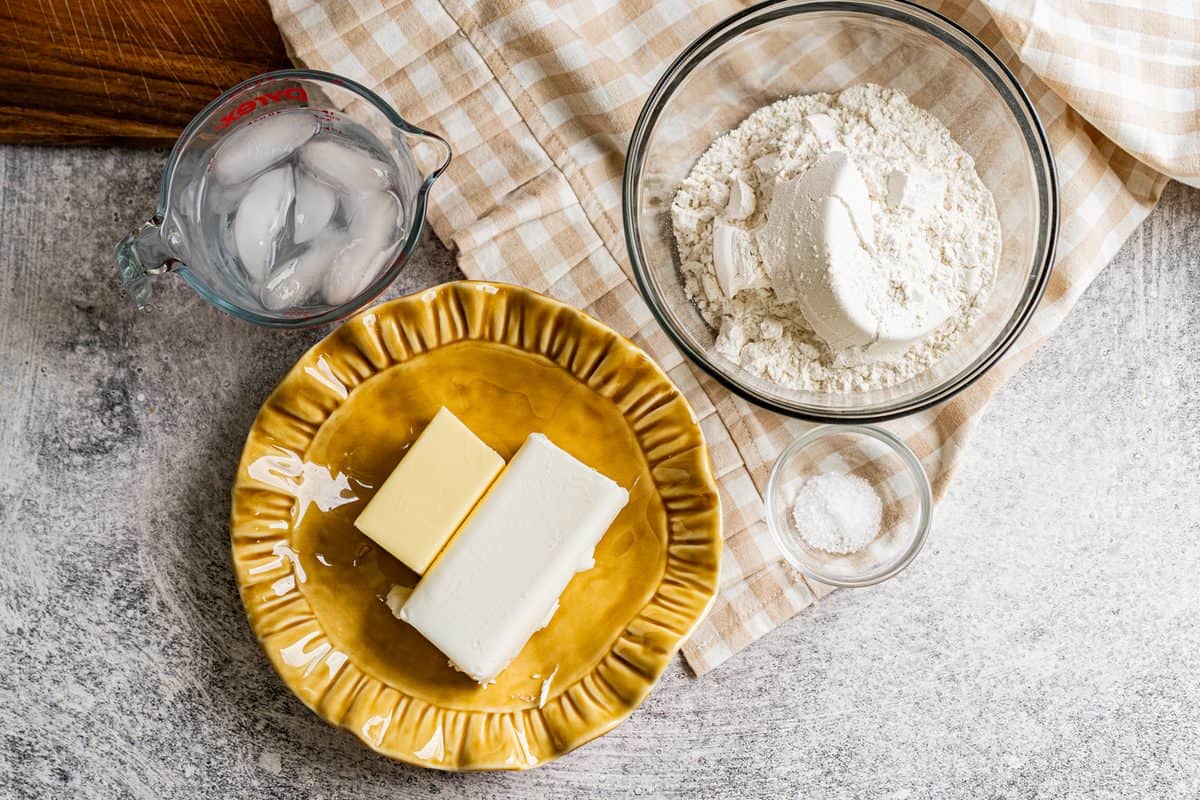
Pie Crust Ingredients:
- All Purpose Flour
- Kosher Salt – essential for flavor.
- Butter – helps with rich flavor and flaky layers. I use frozen butter and grate it into the flour, so that it stays cold but is easy to cut into the dough.
- Shortening – helps make the dough tender, easy to handle and prevents shrinking. I chill the shortening ahead of time. You want all the fats in the pie to be cold!
- Water – Using ice-cold water is critical because it helps keeps the butter and shortening firm throughout the mixing process. When those small pockets of cold fat melt in the hot oven, they release steam, creating the light, airy layers of a perfect pie crust.
How to make Pie Crust:
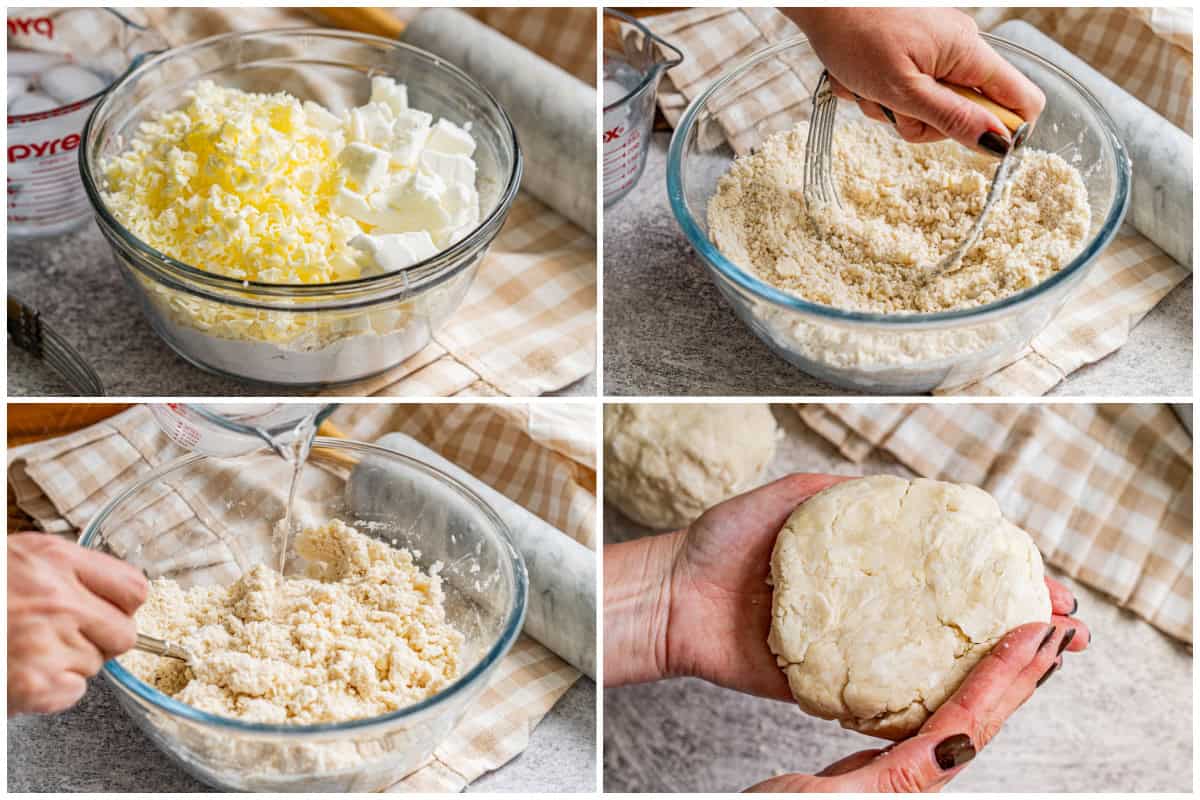
Make Pastry Dough: Mix the flour and salt in a large bowl.
Ice water: Add ice cubes to a measuring cup, fill with ½ cup cold water, and set aside.
Add fats: Grate the frozen butter into the flour, or cut it into very small pieces. Add the chilled shortening and use a pastry blender or fork to cut in both fats until well combined and crumbly.
Combine: Mix in ice water a spoonful at a time until the dough begins to form a ball; you may not need all the water. Avoid over-mixing, just gently shape into a ball and divide in two. Gently flatten each piece into a disk.
Refrigerate: Wrap in plastic and refrigerate for 2 hours, or freeze for 30 minutes (or you can stop here and freeze a few months if you want to make-ahead). This chill is required to keep the fats cold.
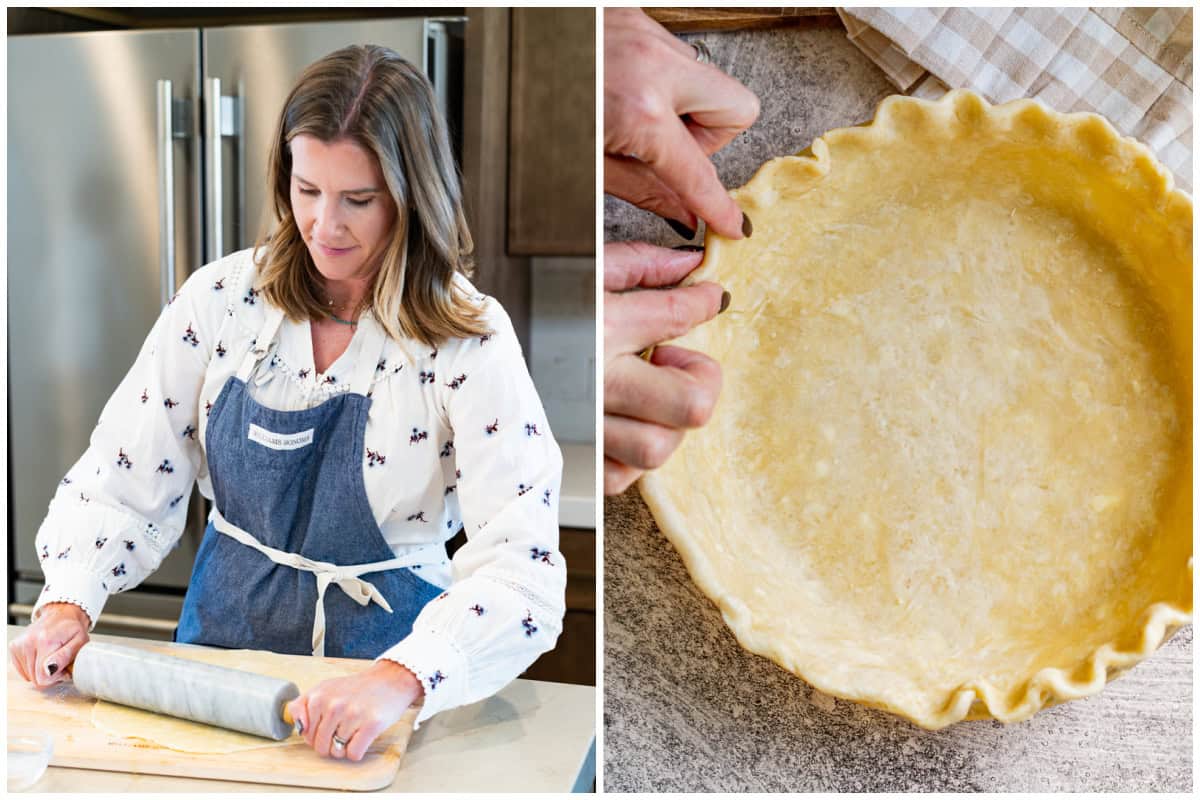
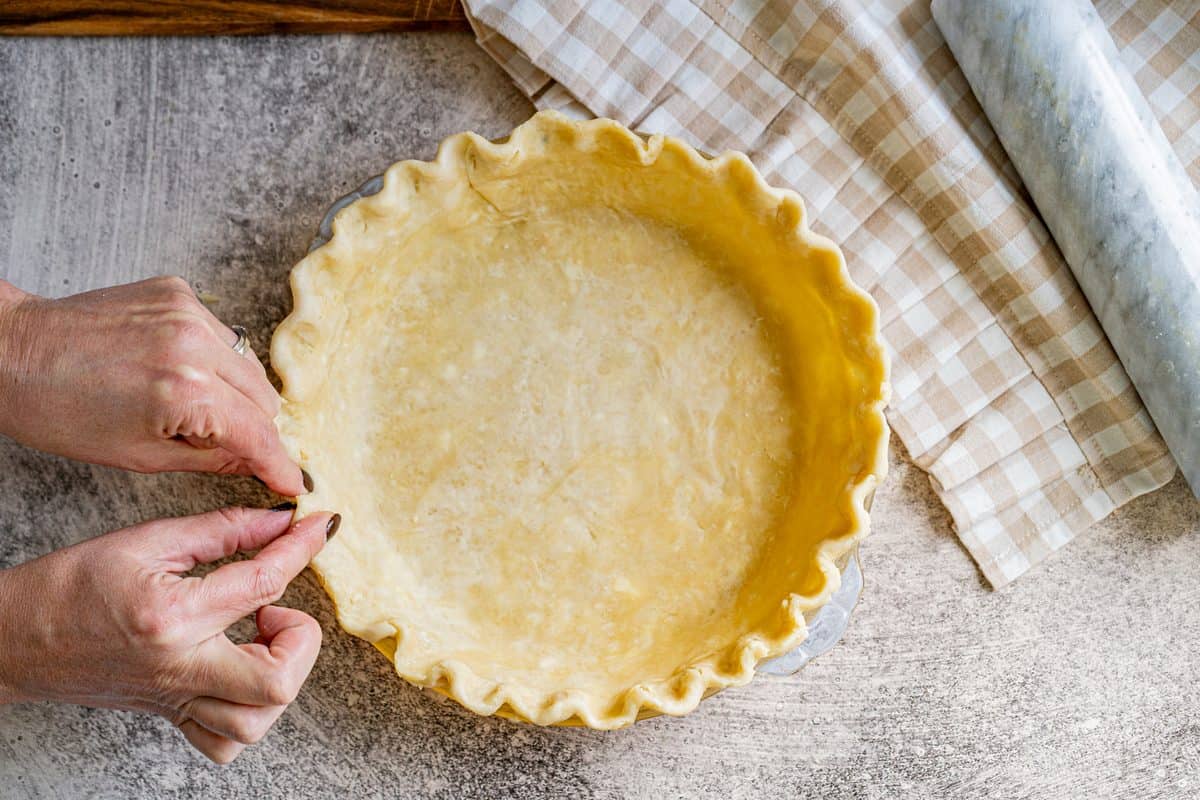
Roll and Shape: Roll the dough on a floured countertop, working from the center outward, into a circle about 1 inch wider than your pie dish. (If helpful, lay a damp cloth flat on the counter, cover with parchment, and lightly flour the parchment and dough. The damp cloth keeps the parchment from moving. Gently turn the pie crust dough into the pie dish and remove the parchment.) Settle rolled out dough into the bottom and sides of the pan (don’t stretch it), then trim and crimp the edges.
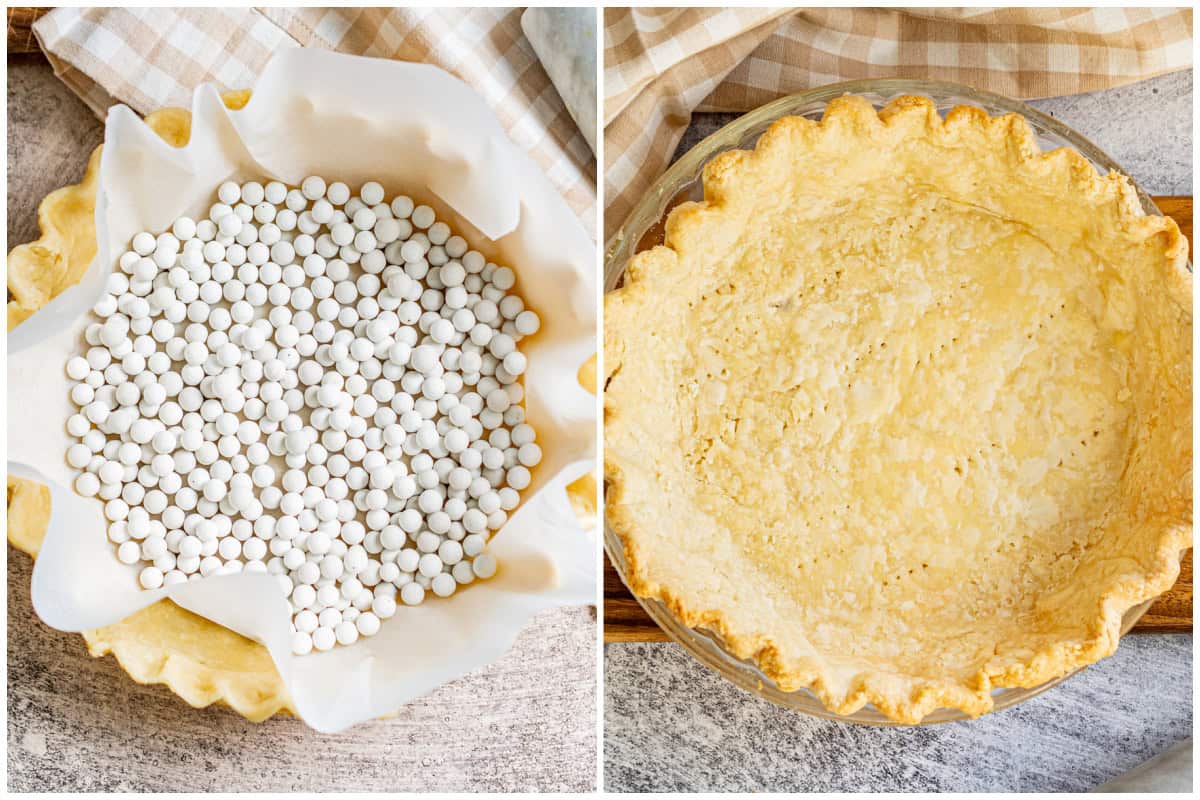
Fill or Blind Bake: For a pie that needs an unbaked crust, add the filling and follow that pie recipe’s baking instructions. To blind bake, line the crust with a large piece of parchment and add pie weights (or 1-2 cups dry beans or dry rice), to prevent shrinking. Bake at 375°F for 15-20 minutes. Carefully lift out the parchment and weights, prick the bottom with a fork, and bake another 10-15 minutes, until lightly golden. Let the homemade pie crust cool before filling.
Pie Crust Troubleshooting
My Biggest Tip: Keep your dough cold! I know it’s tempting to skip ahead, but let it chill before you roll it out (and even after you roll it out and place it in the pie pan). It really does make the difference between a good crust and a great one when the fats are cold going into the oven, so that you get the flakey layers you want.
Why is my crust tough instead of flaky?
This usually means the dough got overworked or had too much water. Both build up gluten, and gluten makes a crust chewy. Handle the dough as little as you can, and add ice water a little at a time, only until the dough holds together when you form it into a ball.
Why did my crust shrink down the sides of the pan?
Either the dough wasn’t chilled long enough or it got stretched to fit the pan. I like to chill it twice, once after rolling and again after it’s shaped in the pan, so the gluten has time to relax. Also, when you transfer the dough into the pie dish, let it drape in loosely and don’t pull/stretch it.
Why is my dough cracking when I roll it?
It’s either too cold or too dry. Let the chilled disc sit on the counter for 5–10 minutes before you roll it. If the edges still look dry and crumbly, sprinkle on a few drops of ice water.
How do I keep the edges from burning?
When the edges turn light golden, usually about halfway through baking, cover them loosely with a ring of foil or a pie shield. That keeps them from over-browning while the rest of the pie finishes baking.
Easy Pie Crust Recipe
Ingredients
- 2 1/2 cups all-purpose flour
- 1 teaspoon kosher salt
- 6 Tablespoons cold unsalted butter
- 3/4 cup vegetable shortening, , chilled
- 1/2 cup ice water
Instructions
- Mix flour and salt in a large mixing bowl. Add ice cubes to a measuring cup and fill with ½ cup cold water. Set aside.2 ½ cups all-purpose flour, 1 teaspoon kosher salt
- Add fats: Grate frozen butter into the bowl, or cut it into very small pieces. Add chilled shortening and use a pastry blender or fork to cut the fats into the flour until well combined and resembles coarse crumbs.6 Tablespoons cold unsalted butter, ¾ cup vegetable shortening
- Add ice water a spoonful at a time, mixing until the dough begins to come together into a ball. Be careful not to over mix, and you may not need all of the water. Gently mold the dough into a ball.½ cup ice water
- Divide dough into 2 pieces and press each to flatten into a disk.
- Refrigerate: Cover dough discs with plastic wrap and refrigerate the dough for 2 hours (or freeze for 30 minutes). Refrigeration is mandatory as you need the fats in the pie dough to be cold when it's rolled out and placed in oven).
- Roll out dough: Lightly flour the parchment and dough and roll the dough into a large circle, about 1-inch larger then the diameter of your pie dish. Always start at the center of the crust, and roll outwards. If you're new to pie making, it may be helpful to use this method: dampen a large cloth and lay it flat on your countertop, with a large piece of parchment paper over it (the damp towel will keep the parchment from moving). Roll out the dough and then use the parchment paper to help lift the pie and gently flip into the pie pan.
- Place in pie pan: Gently place the dough into your pie dish and settle it into the bottom and sides of the pan. (Don't pull the dough to fit–just drape it gently in to fill the pan. This will help prevent shrinking). Trim and crimp the edges of the crust. (At this point I like to stick the pie in the fridge again, while I prepare the filling, to make sure the dough is cold before it goes in the oven.)
- For Pies requiring an unbaked pie crust (like pumpkin, apple, or even chicken pot pie): Fill the unbaked crust with pie filling, add top crust if needed, and bake according to pie recipe instructions.
- For a Blind-Baked Pie Crust (pre-baked crust) you need pie weights, dry beans or dry rice. (Without pie weights the crust will shrink into the pan as it bakes). Place a large piece of parchment paper into the pan, over the unbaked crust and add pie weights, (or 1-2 cups dry beans, or dry rice) on top. Bake at 375° F for 15-20 minutes. Remove pie weights by carefully lifting up on parchment paper. Prick the bottom of the pie crust with a fork, then return to oven for 10-15 minutes, until lightly golden. Allow crust to cool before adding filling.
Notes
Nutrition
Nutrition information is automatically calculated, so should only be used as an approximation.
Text me new recipe ideas!
Simple, tasty ideas sent once a week. No spam.
Follow Me
I originally shared this recipe November 2016. Updated March 2018, November 2022, October 2024 and October 2026.



I use this recipe every time I make a pot pie or dessert and it has never failed me. If you are looking for a good crust recipe, this is the best imo. Flakey, tastes absolutely stellar.
I have tried this recipe for the first time and it turned out great. I will always use this one. Flakey, delicious. My pot pie was so good.
Have you ever used this crust to make a gallette? Any tips on that if so?
Yes, I have! Here’s the recipe and tips: https://tastesbetterfromscratch.com/peach-blackberry-tart/
How do you keep the sides from shrinking down?
Be sure the pie crust edge is really high, and be sure to refrigerate the blind baked crust before baking.
This pie crust was excellent! Really easy to make and delicious. I used half for a sweet potato pie and then I added rosemary and salt and it was a great base for a savory pie.
I tried this tonight and seemed like I had to much fat in the mixture.
I tried both on the counter and with parchment paper and couldn’t get it to transfer into the pie dish without breaking? Does the dough need to be really chilled. I’ve watched the video and seems like it doesn’t split on you? I’m having a hard time Because it keeps slipping. Any thoughts and tips?
Absolutely needs to be chilled, very cold.
Hi! I’m From Hungary, can you tell me what vegetable shortening is? Is this fat? Can i use coconut fat for shortening? 🙂
Vegetable shortening in US is often Crisco shortening.
I do not think Coconut fat would work, the melting points will be different. Sorry
It turned out great! I did find it rather salty, so next time I’ll only use 1/2tsp salt
I came across this recipe when looking for a meat pie crust, like for pot pie. Would you do anything different for a savory crust?
This is the recipe I always use for pot pie–it works great for savory as well! Enjoy
For your perfect pie crust, does 12 servings make the bottom of one pie or the bottom and top
This recipe makes enough dough for two crusts. (So you could use it for one pie that requires a top and bottom crust, or for two pies that only require a bottom crust.)
Can you replace the flour with an almond or coconut flour to make it gluten free?
A good tip for lining a loose bottom flan case is to roll the pastry out, place on to the bottom fold the sides in before placing it in the tin, no credit to me it came from the lovely Mary Berry here in the UK.
Thanks for sharing!