This post contains affiliate links.
Our easy Pie Crust recipe makes the most flakey, tender, and flavorful crust, thanks to butter, shortening, flour and salt. The recipe makes two crusts, so you can make a double-crust pie or save one for another day.
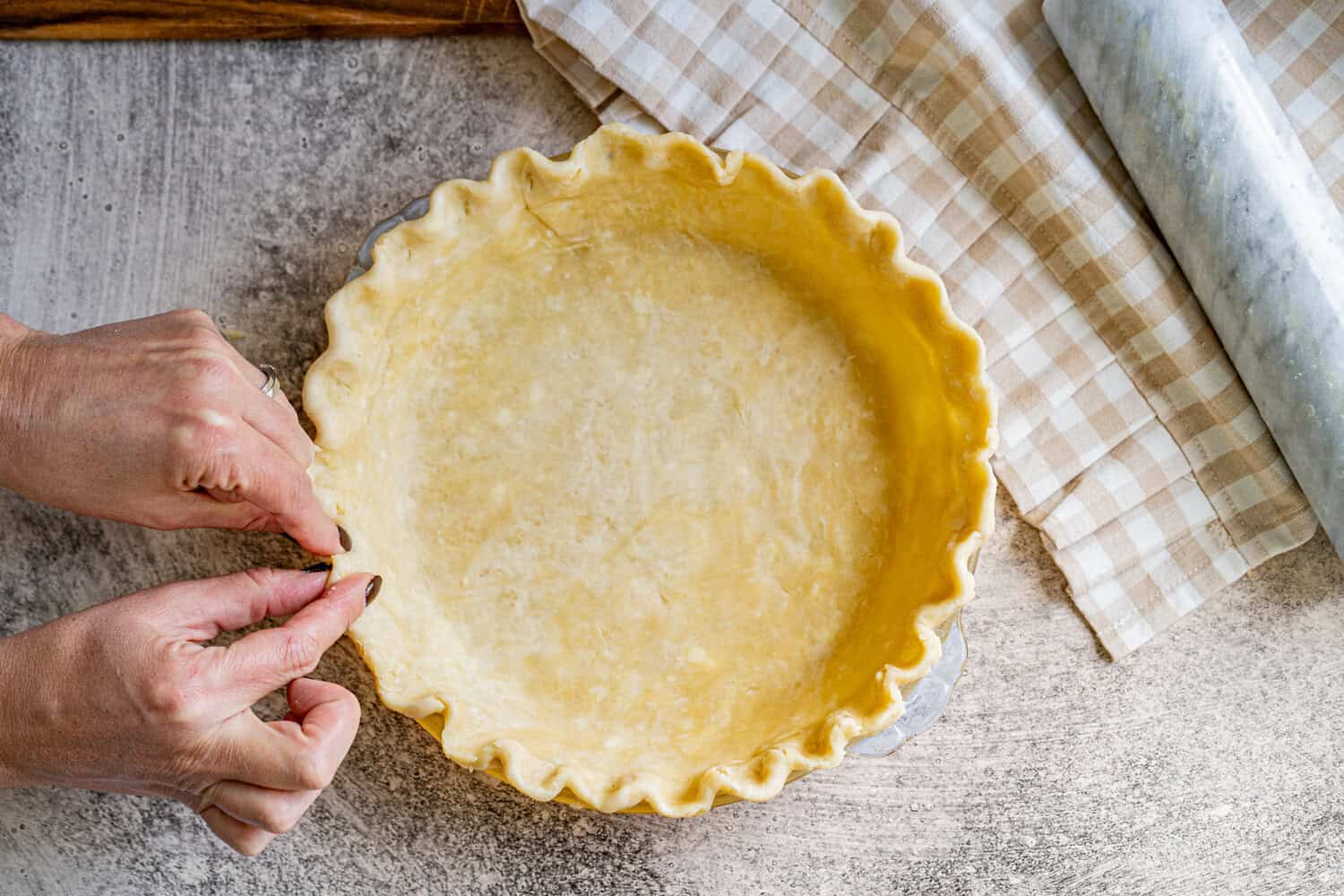
Homemade Pie Crust is easy and inexpensive!
If you are going to make anything from scratch, homemade pie crust is the right choice! You only need 4 ingredients, and it takes just a few minutes of time. I’ve been making homemade pies for decades (since I was a pre-teen!) and I have several tips for a fail-proof pie crust.
Why use butter and shortening in pie crust? After years of making pie, I’m convinced the best crust uses both butter and shortening. Butter gives you that rich flavor and flaky layers. Shortening makes the crust tender and the dough easier to work with, and it helps the crust hold its shape in the oven. You CAN use all butter in this recipe if you would like (I have done so and it’s still delicious).
Pro Tip: Pie dough freezes great, so I like to make this pie crust recipe weeks ahead of time (especially for Thanksgiving), so that it’s ready to roll (pun untended 🙂 ).
Use this pie crust in any of our pie recipes, like Chocolate Pecan Pie, Fresh Peach Pie, Chicken Pot Pie, Eggnog Pie, Apple Pie, Lemon Meringue Pie, and Coconut Cream Pie!
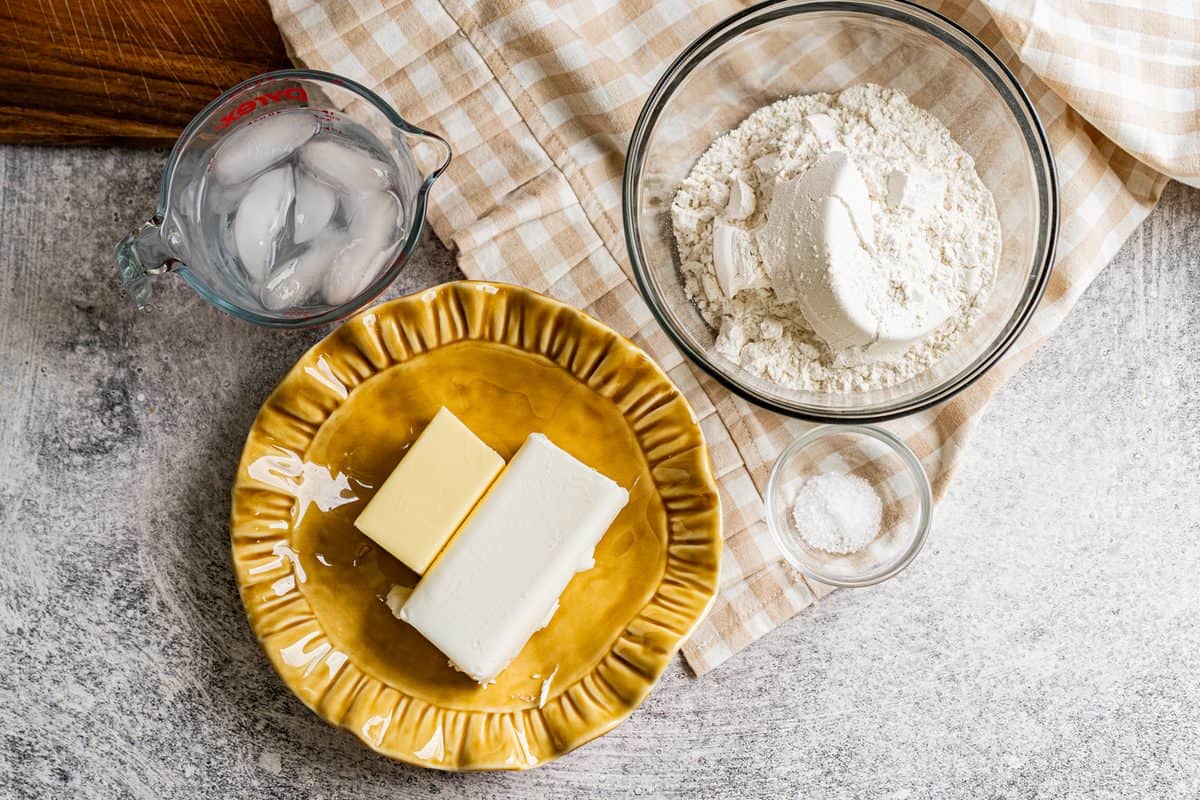
Pie Crust Ingredients:
- All Purpose Flour
- Kosher Salt – essential for flavor.
- Butter – helps with rich flavor and flaky layers. I use frozen butter and grate it into the flour, so that it stays cold but is easy to cut into the dough.
- Shortening – helps make the dough tender, easy to handle and prevents shrinking. I chill the shortening ahead of time. You want all the fats in the pie to be cold!
- Water – Using ice-cold water is critical because it helps keeps the butter and shortening firm throughout the mixing process. When those small pockets of cold fat melt in the hot oven, they release steam, creating the light, airy layers of a perfect pie crust.
How to make Pie Crust:
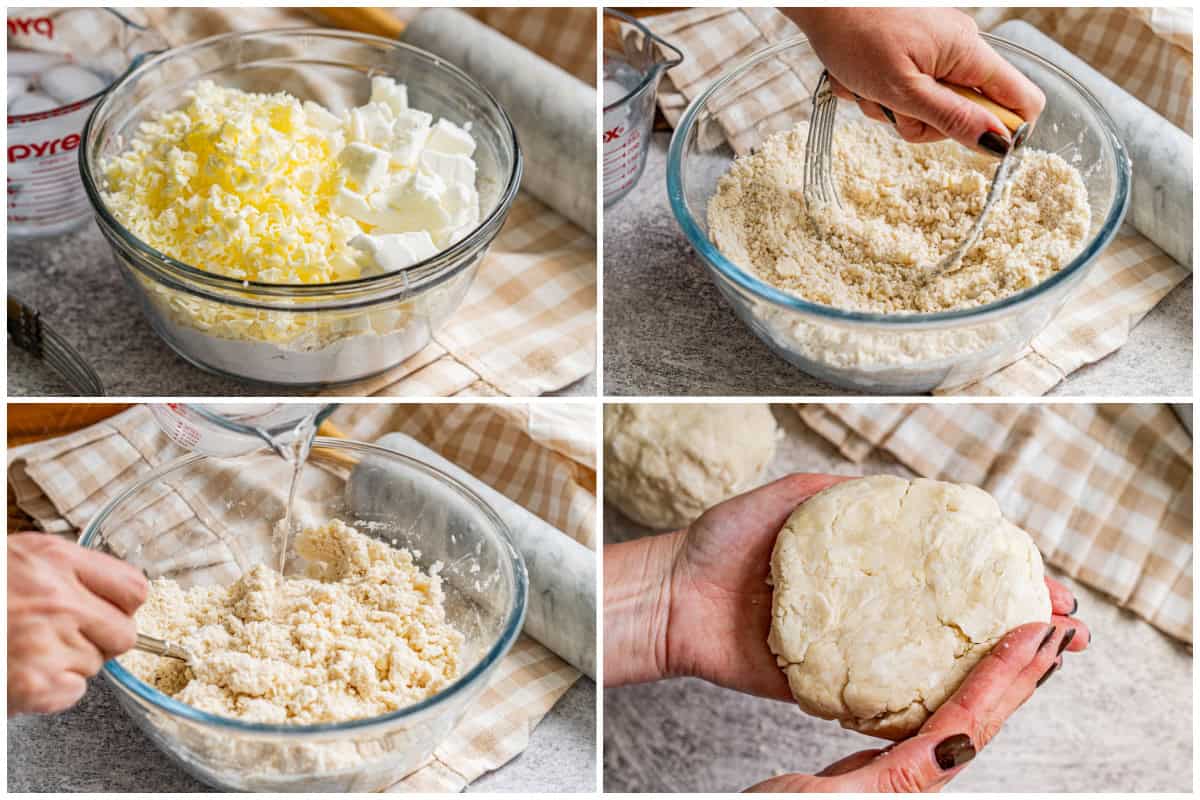
Make Pastry Dough: Mix the flour and salt in a large bowl.
Ice water: Add ice cubes to a measuring cup, fill with ½ cup cold water, and set aside.
Add fats: Grate the frozen butter into the flour, or cut it into very small pieces. Add the chilled shortening and use a pastry blender or fork to cut in both fats until well combined and crumbly.
Combine: Mix in ice water a spoonful at a time until the dough begins to form a ball; you may not need all the water. Avoid over-mixing, just gently shape into a ball and divide in two. Gently flatten each piece into a disk.
Refrigerate: Wrap in plastic and refrigerate for 2 hours, or freeze for 30 minutes (or you can stop here and freeze a few months if you want to make-ahead). This chill is required to keep the fats cold.
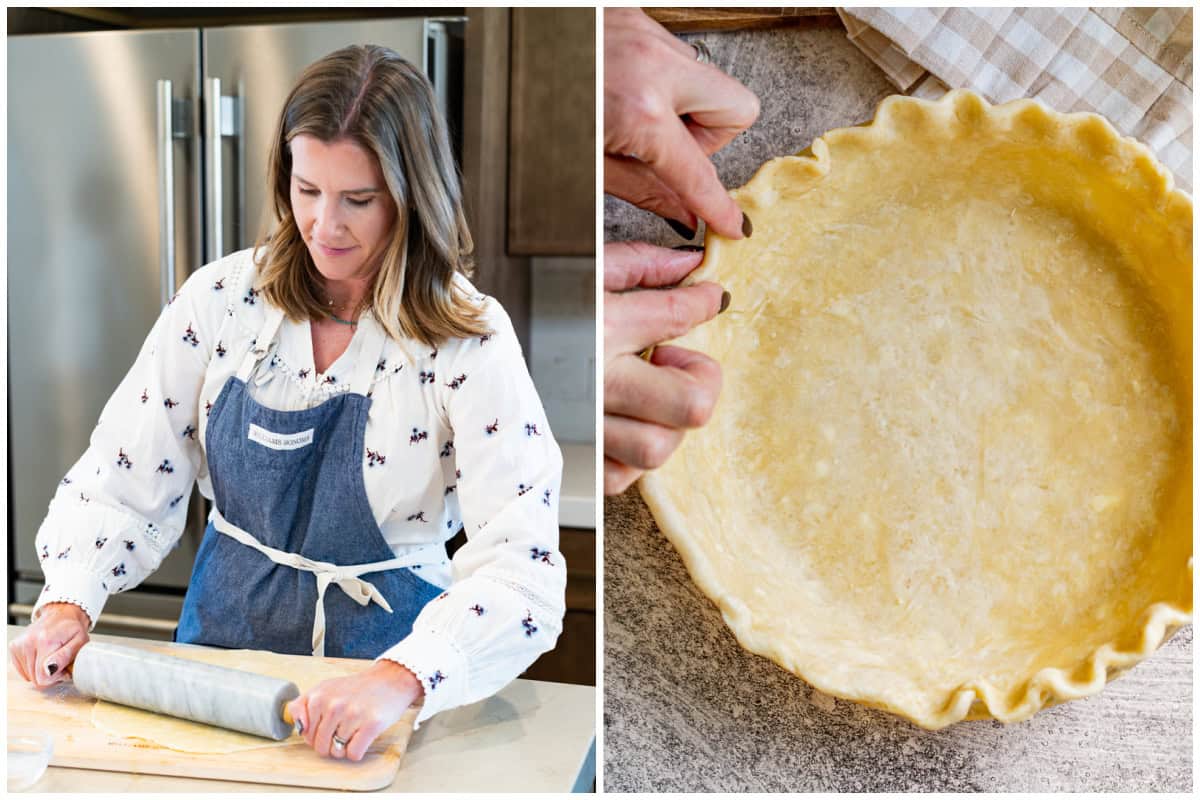
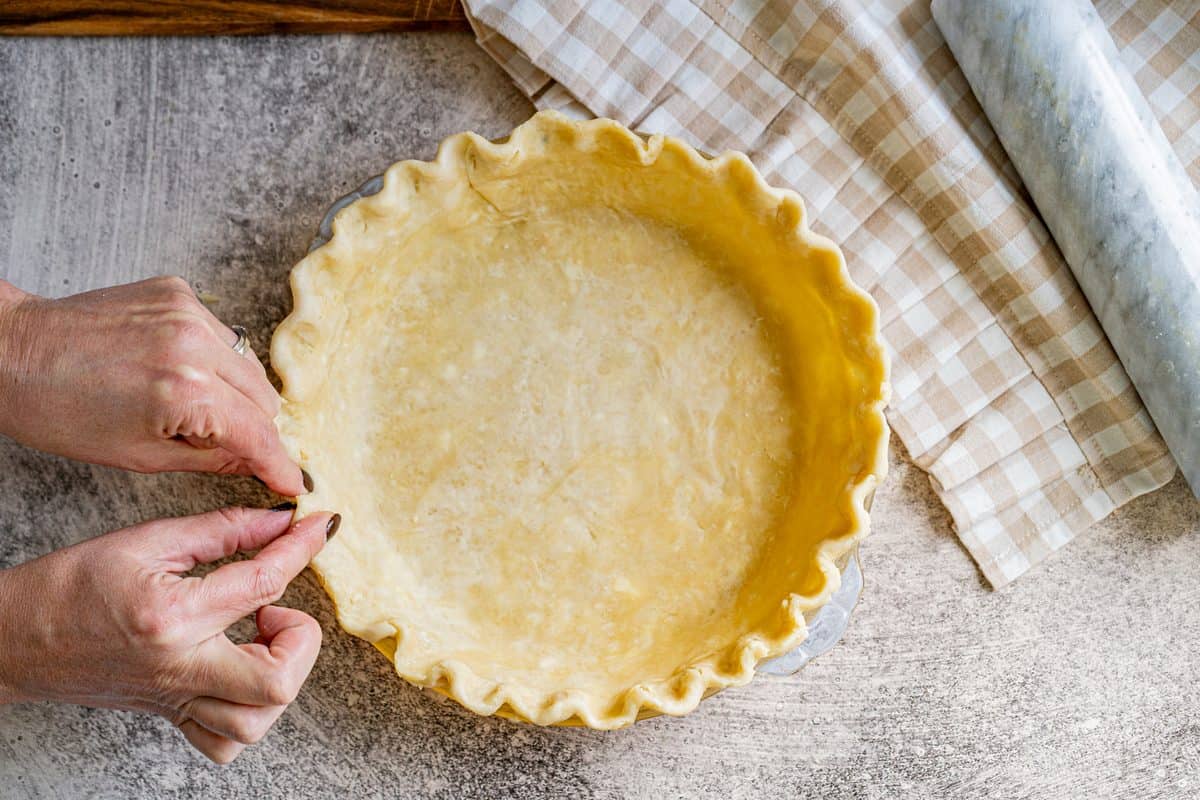
Roll and Shape: Roll the dough on a floured countertop, working from the center outward, into a circle about 1 inch wider than your pie dish. (If helpful, lay a damp cloth flat on the counter, cover with parchment, and lightly flour the parchment and dough. The damp cloth keeps the parchment from moving. Gently turn the pie crust dough into the pie dish and remove the parchment.) Settle rolled out dough into the bottom and sides of the pan (don’t stretch it), then trim and crimp the edges.
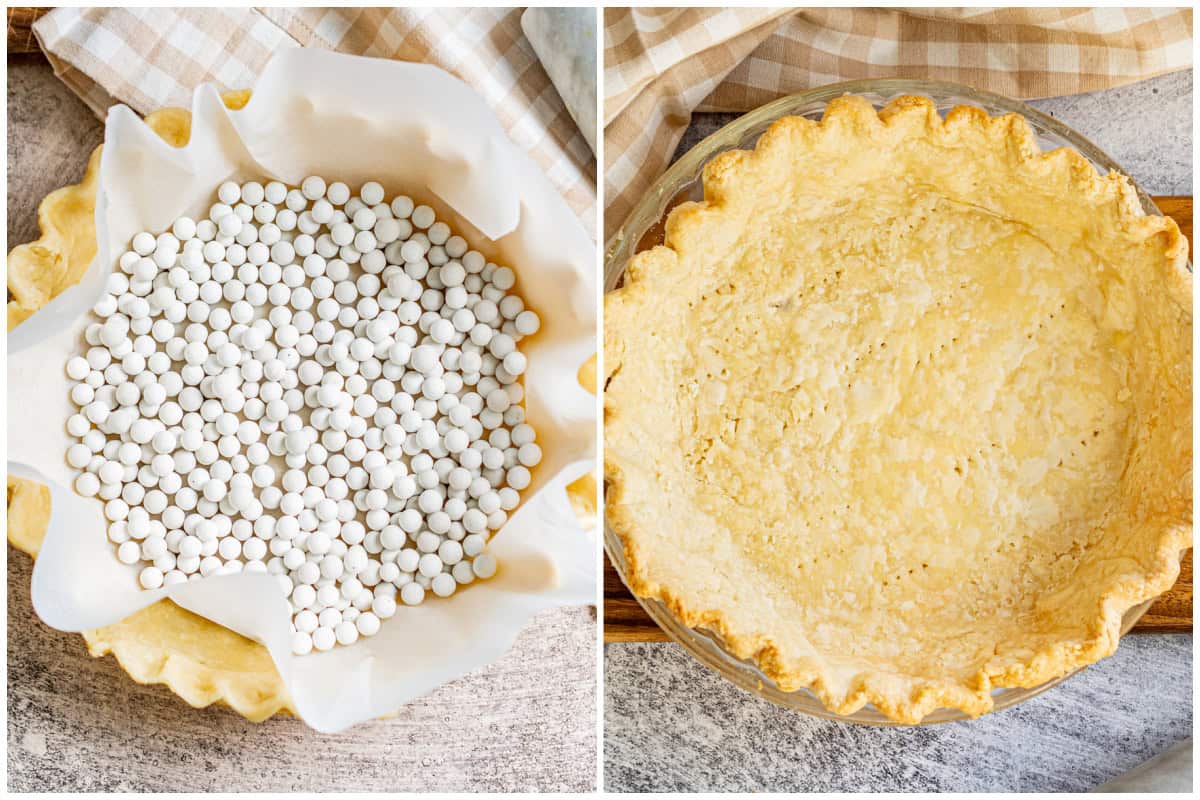
Fill or Blind Bake: For a pie that needs an unbaked crust, add the filling and follow that pie recipe’s baking instructions. To blind bake, line the crust with a large piece of parchment and add pie weights (or 1-2 cups dry beans or dry rice), to prevent shrinking. Bake at 375°F for 15-20 minutes. Carefully lift out the parchment and weights, prick the bottom with a fork, and bake another 10-15 minutes, until lightly golden. Let the homemade pie crust cool before filling.
Pie Crust Troubleshooting
My Biggest Tip: Keep your dough cold! I know it’s tempting to skip ahead, but let it chill before you roll it out (and even after you roll it out and place it in the pie pan). It really does make the difference between a good crust and a great one when the fats are cold going into the oven, so that you get the flakey layers you want.
Why is my crust tough instead of flaky?
This usually means the dough got overworked or had too much water. Both build up gluten, and gluten makes a crust chewy. Handle the dough as little as you can, and add ice water a little at a time, only until the dough holds together when you form it into a ball.
Why did my crust shrink down the sides of the pan?
Either the dough wasn’t chilled long enough or it got stretched to fit the pan. I like to chill it twice, once after rolling and again after it’s shaped in the pan, so the gluten has time to relax. Also, when you transfer the dough into the pie dish, let it drape in loosely and don’t pull/stretch it.
Why is my dough cracking when I roll it?
It’s either too cold or too dry. Let the chilled disc sit on the counter for 5–10 minutes before you roll it. If the edges still look dry and crumbly, sprinkle on a few drops of ice water.
How do I keep the edges from burning?
When the edges turn light golden, usually about halfway through baking, cover them loosely with a ring of foil or a pie shield. That keeps them from over-browning while the rest of the pie finishes baking.
Easy Pie Crust Recipe
Ingredients
- 2 1/2 cups all-purpose flour
- 1 teaspoon kosher salt
- 6 Tablespoons cold unsalted butter
- 3/4 cup vegetable shortening, , chilled
- 1/2 cup ice water
Instructions
- Mix flour and salt in a large mixing bowl. Add ice cubes to a measuring cup and fill with ½ cup cold water. Set aside.2 ½ cups all-purpose flour, 1 teaspoon kosher salt
- Add fats: Grate frozen butter into the bowl, or cut it into very small pieces. Add chilled shortening and use a pastry blender or fork to cut the fats into the flour until well combined and resembles coarse crumbs.6 Tablespoons cold unsalted butter, ¾ cup vegetable shortening
- Add ice water a spoonful at a time, mixing until the dough begins to come together into a ball. Be careful not to over mix, and you may not need all of the water. Gently mold the dough into a ball.½ cup ice water
- Divide dough into 2 pieces and press each to flatten into a disk.
- Refrigerate: Cover dough discs with plastic wrap and refrigerate the dough for 2 hours (or freeze for 30 minutes). Refrigeration is mandatory as you need the fats in the pie dough to be cold when it's rolled out and placed in oven).
- Roll out dough: Lightly flour the parchment and dough and roll the dough into a large circle, about 1-inch larger then the diameter of your pie dish. Always start at the center of the crust, and roll outwards. If you're new to pie making, it may be helpful to use this method: dampen a large cloth and lay it flat on your countertop, with a large piece of parchment paper over it (the damp towel will keep the parchment from moving). Roll out the dough and then use the parchment paper to help lift the pie and gently flip into the pie pan.
- Place in pie pan: Gently place the dough into your pie dish and settle it into the bottom and sides of the pan. (Don't pull the dough to fit–just drape it gently in to fill the pan. This will help prevent shrinking). Trim and crimp the edges of the crust. (At this point I like to stick the pie in the fridge again, while I prepare the filling, to make sure the dough is cold before it goes in the oven.)
- For Pies requiring an unbaked pie crust (like pumpkin, apple, or even chicken pot pie): Fill the unbaked crust with pie filling, add top crust if needed, and bake according to pie recipe instructions.
- For a Blind-Baked Pie Crust (pre-baked crust) you need pie weights, dry beans or dry rice. (Without pie weights the crust will shrink into the pan as it bakes). Place a large piece of parchment paper into the pan, over the unbaked crust and add pie weights, (or 1-2 cups dry beans, or dry rice) on top. Bake at 375° F for 15-20 minutes. Remove pie weights by carefully lifting up on parchment paper. Prick the bottom of the pie crust with a fork, then return to oven for 10-15 minutes, until lightly golden. Allow crust to cool before adding filling.
Notes
Nutrition
Nutrition information is automatically calculated, so should only be used as an approximation.
Text me new recipe ideas!
Simple, tasty ideas sent once a week. No spam.
Follow Me
I originally shared this recipe November 2016. Updated March 2018, November 2022, October 2024 and October 2026.



I use this recipe every time I make a pot pie or dessert and it has never failed me. If you are looking for a good crust recipe, this is the best imo. Flakey, tastes absolutely stellar.
I have tried this recipe for the first time and it turned out great. I will always use this one. Flakey, delicious. My pot pie was so good.
I have always used just butter for my crust. Even though they taste amazing, it is missing the flakiness and decided to use yours. Because of certain movements with my hands I need to use my food processor for making my crust. Have you tried this and if so was there anything different I should do. Thank you
We haven’t tested this exact recipe in a food processor, but it should work well — just pulse the flour with the cold butter and shortening in short bursts until it looks like coarse crumbs, then pulse in the ice water just until the dough starts to come together. Try not to over-process, since that’s an easy way to end up with a tougher crust.
Hi Lauren! I’m ready to bake your tomato pie with your crust. However… (and this one always stumps me in recipes) when it says “kosher salt” – I clicked on the link and haven’t heard of that one. I use Morton kosher salt. What’s the equivalent from your brand to another please? I know they’re not interchangeable. I’m not enough of an intuitive cook to “wing it” and often when I don’t know what kind they used in the recipe or how it translates to other salts, I move right on by. Meanwhile, I LOVE tomato pie and lost my beloved recipe I used for years. Yours is the first I’ve found since that I want to try. Thank you in advance for your reply. I’m so happy to have found your site!
Morton and Diamond Crystal kosher salt aren’t equal by volume, Morton is denser, so a teaspoon of it has noticeably more sodium than a teaspoon of Diamond Crystal. For this crust it’s a small amount and mostly for flavor, so using your Morton kosher salt at the same teaspoon measurement will work just fine.
Thank you!
I don’t know what I’m doing wrong but the three times that I have made this crust it seems as if there’s way too much “liquid” to dry ratio. Each time I’ve made it, following the exact metric recipe, it’s already the texture that it needs to be before adding any of the ice water! So I end up having to add more flour so that way I can add the water… at the point of putting it in plastic wrap and putting it in the fridge to set it’s basically not even the same recipe anymore cause I always end up having to add like 200 g more of flour as well as I like my stuff sweet so I add about 50 g of sugar and even then I still only use maybe a quarter cup of the ice water… I don’t know what I’m doing wrong. Maybe my fats aren’t cold enough, but I literally put them in the freezer for about an hour before mixing my dough…
It sounds like you’re doing everything right! You definitely don’t need to use all of the ice water. Humidity, flour brands, and even how the flour is measured can affect the dough, so it’s normal to stop adding water once the dough comes together.
I had the same problem. Followed directions to a “T”. Ended up tossing dough in the trash. So sorry – never replied to any recipe with a negative. THIS dough was a problem. Thank you.
Be careful when using the recipe calculator. I was trying to make a large batch of dough, needed 6x, and the calculator was all over the place, increasing some ingredients while decreasing others. Just do the calculations yourself.
Incredibly frustrating to roll out and transfer to pie plate. Literally disintegrated. I’ve been making pie crusts for 20 plus years and never saw anything like this. Yes, I followed all the steps.
I made this tonight. It was delicious. I used Sally’s Baking Addition pie crust because I don’t like to use shortening – and it’s hard to come by where I live (Egypt). It was absolutely incredible.
The only tweaks I made was to use fresh garlic. I also added a bit more spices based on comments. I used pre- seasoned chicken breasts and then added thyme, oregano and paprika. It was outstanding. I will make it again. Thank you!
Made this using the 0.5 metric measurement for one crust and it was really good! Thank you!
Could I use lard insteaf of veg shortening?
Yes
I adjusted so I have just a bit more dough for larger crusts, but not having to double.
3 1/3 cups all-purpose flour (400g)
1 1/3 teaspoons kosher salt
8 tablespoons cold unsalted butter
1 cup vegetable shortening, chilled
2/3 cup ice water
This crust just does not work well for me. Today was the second time making it and it just seems to fall apart too easily. I roll it on parchment paper, after sprinkling with flour, and it still sticks. It sticks to the rolling pin (even though I flour that and the dough), and then when I’m turning the parchment over into the pie dish, it’s hard getting it to release from the parchment without breaking apart, so I’m having to piece it together. The taste is very good, but I’m going to have to try another recipe.
Don’t give up on that dough. If it’s dry very little sprinkles of water. If too wet it needs flour. Knead it but not for a long amount of time. If you are making 2 halves of a pie crust, take a break. Put in Press & Seal and refrigerate. Try to conquer the second ball of dough. Hang in there.😥