This post contains affiliate links.
A flaky, buttery crust is what makes a homemade pie worth the effort, whether it is holding pumpkin, apple, or a savory quiche. A tough, chewy crust is usually the result of a few small habits, not a bad recipe. Our Easy Pie Crust has a 4.96 star rating from more than 1,500 reviews, and it uses just five ingredients: flour, salt, cold butter, chilled shortening, and ice water. The method matters just as much as the ingredients, though. If your crust has ever turned out tough instead of flaky, one of these common mistakes is probably to blame.
Letting the butter and shortening get warm
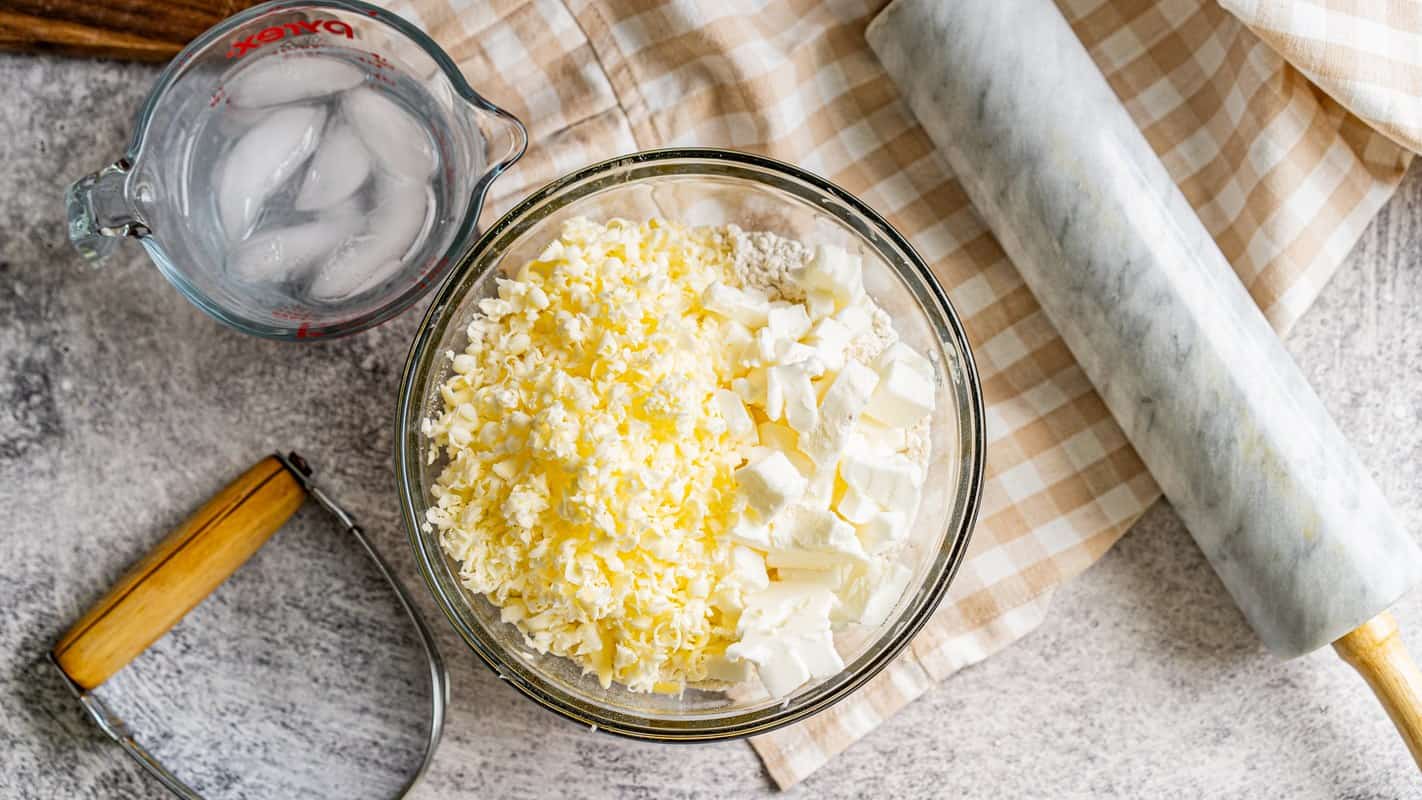
Flaky layers come from little pieces of cold fat that stay solid in the dough. In the hot oven, those pieces melt and release steam, which puffs the dough into thin, crisp layers. If the fat softens before the crust goes in the oven, it blends into the flour and you get a dense, crumbly crust instead. That is why our pie crust recipe calls for grating frozen butter right into the flour and using shortening straight from the fridge.
Work quickly and use a pastry blender or fork to cut the fats in until the mixture looks like coarse crumbs, with some pea-size pieces still visible. Warm hands melt butter fast, so avoid rubbing the dough between your fingers. If your kitchen is warm, pop the whole bowl in the freezer for 10 minutes before you add the water.
Adding all of the water at once
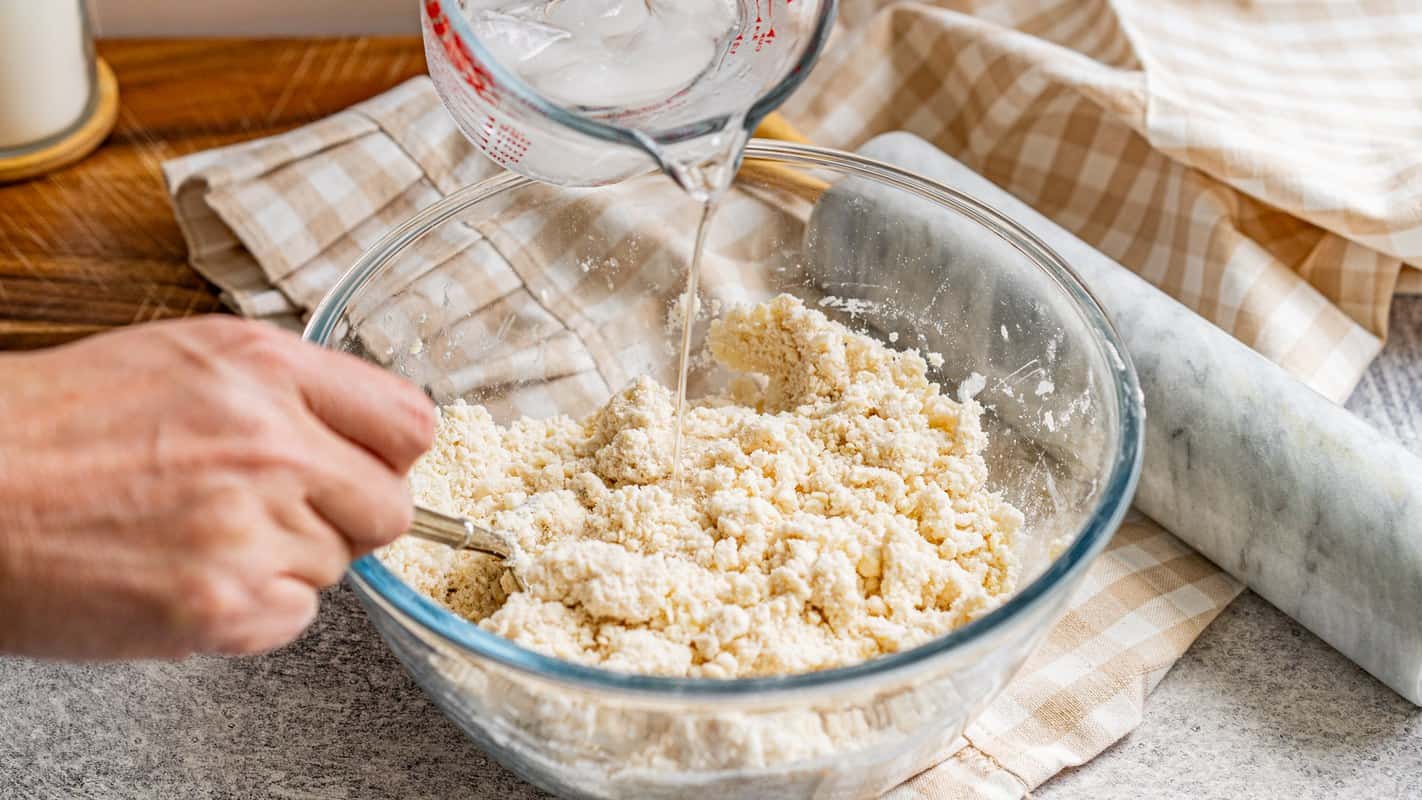
Too much water and too much mixing are the two biggest reasons a crust turns chewy. Both build up gluten, the same stretchy structure that makes bread dough tough. The recipe calls for ½ cup of ice water, but you add it a spoonful at a time, stirring gently, and stop as soon as the dough starts to hold together. You may not need all of it.
The dough should look shaggy and a little crumbly, and it should hold together when you squeeze a handful. Gently press it into a ball instead of kneading it. A few streaks of butter are a good sign, because those streaks become your flaky layers.
Skipping the chill time
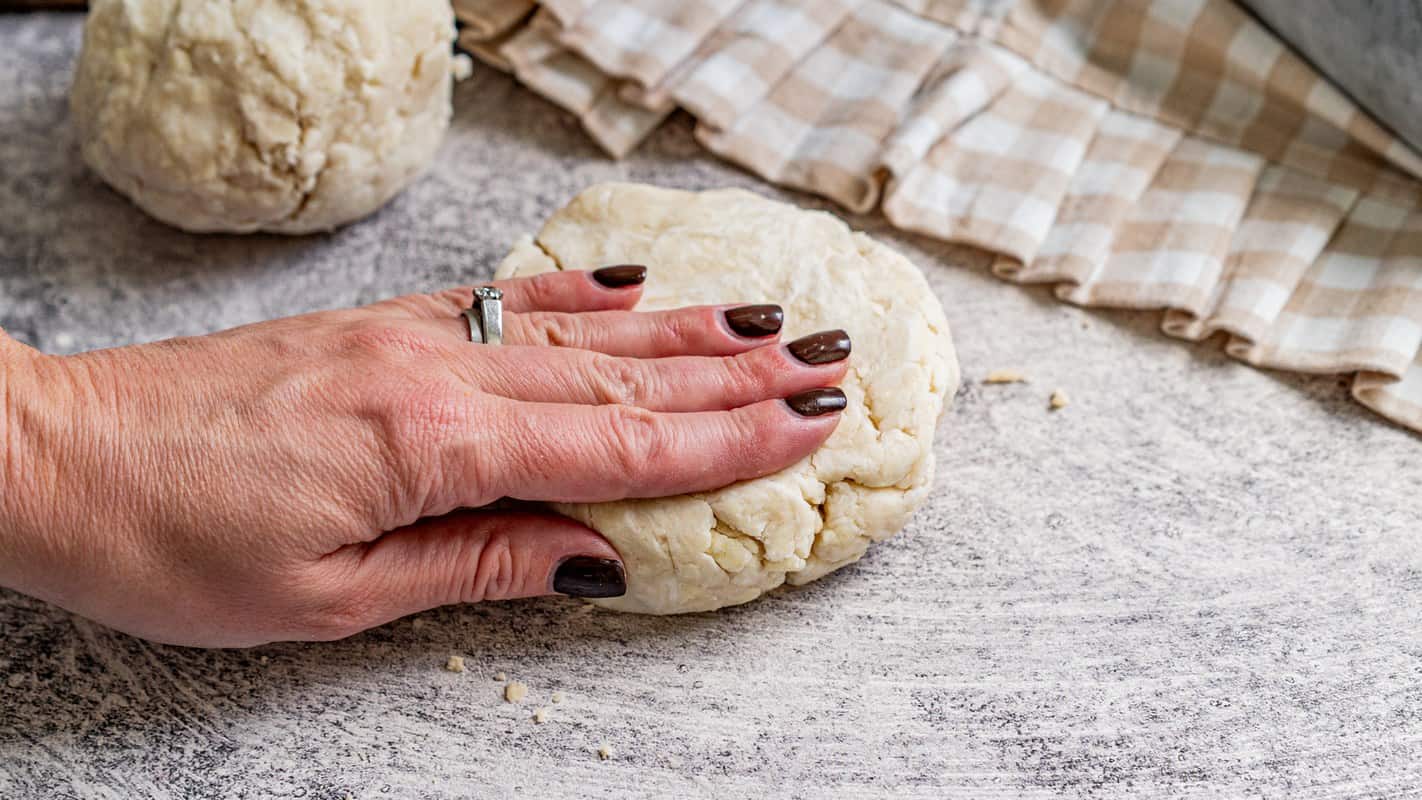
It is tempting to roll out the dough right away, but chilling is not optional. Divide the dough in half, press each piece into a flat disk, wrap them in plastic, and refrigerate for 2 hours, or freeze for 30 minutes if you are short on time. Resting firms up the fat again and gives the flour time to absorb the water evenly, so the dough rolls out smoothly without cracking.
Chilled dough is also much easier to handle, which means less flour on the counter and less overworking. This recipe makes two crusts, so you can wrap the second disk and freeze it for up to 3 months. Thaw it in the fridge before rolling, and you have a head start on your next pie, like our Chocolate Pecan Pie recipe.
Stretching the dough to fit the pan
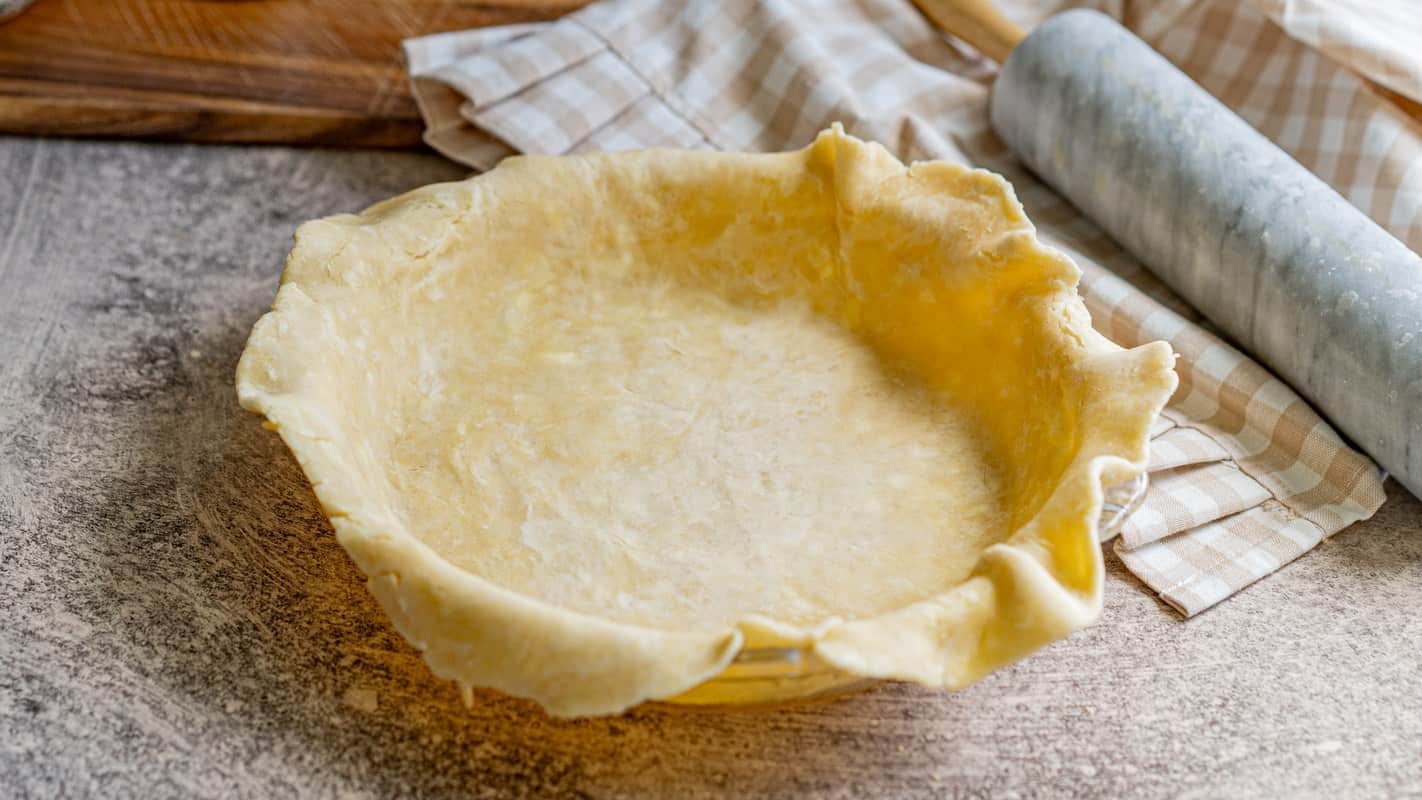
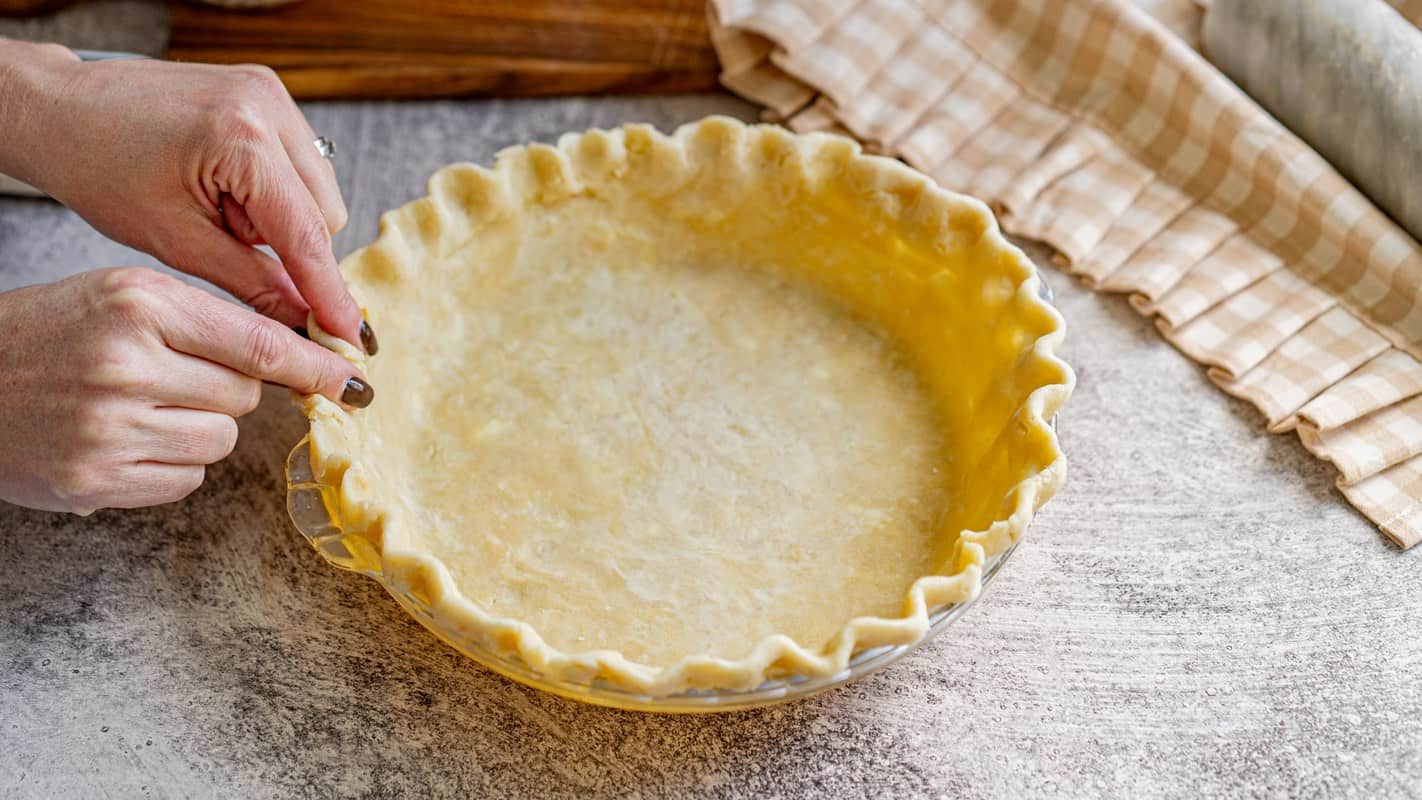
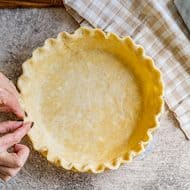
Roll the dough from the center out, into a circle about 1 inch larger than your pie dish. When you move it to the dish, let it drape loosely and carefully settle into the bottom and sides. Pulling or stretching the dough to make it fit creates tension, and that stretched dough shrinks back as it bakes, leaving you with short, thick sides.
If transferring the dough makes you nervous, roll it out on lightly floured parchment set over a damp towel so it doesn’t slide around, then use the parchment to help flip it into the pan. Trim and crimp the edges once the dough is settled, and patch any small tears with scraps instead of tugging the edges.
Putting a warm crust straight into the oven
After all that handling, the dough has warmed up again. Slide the pie dish into the fridge while you make the filling so the crust is cold when it hits the oven. For a pie with a baked filling, like blueberry, cherry, or chicken pot pie, you fill the unbaked crust and bake according to that recipe.
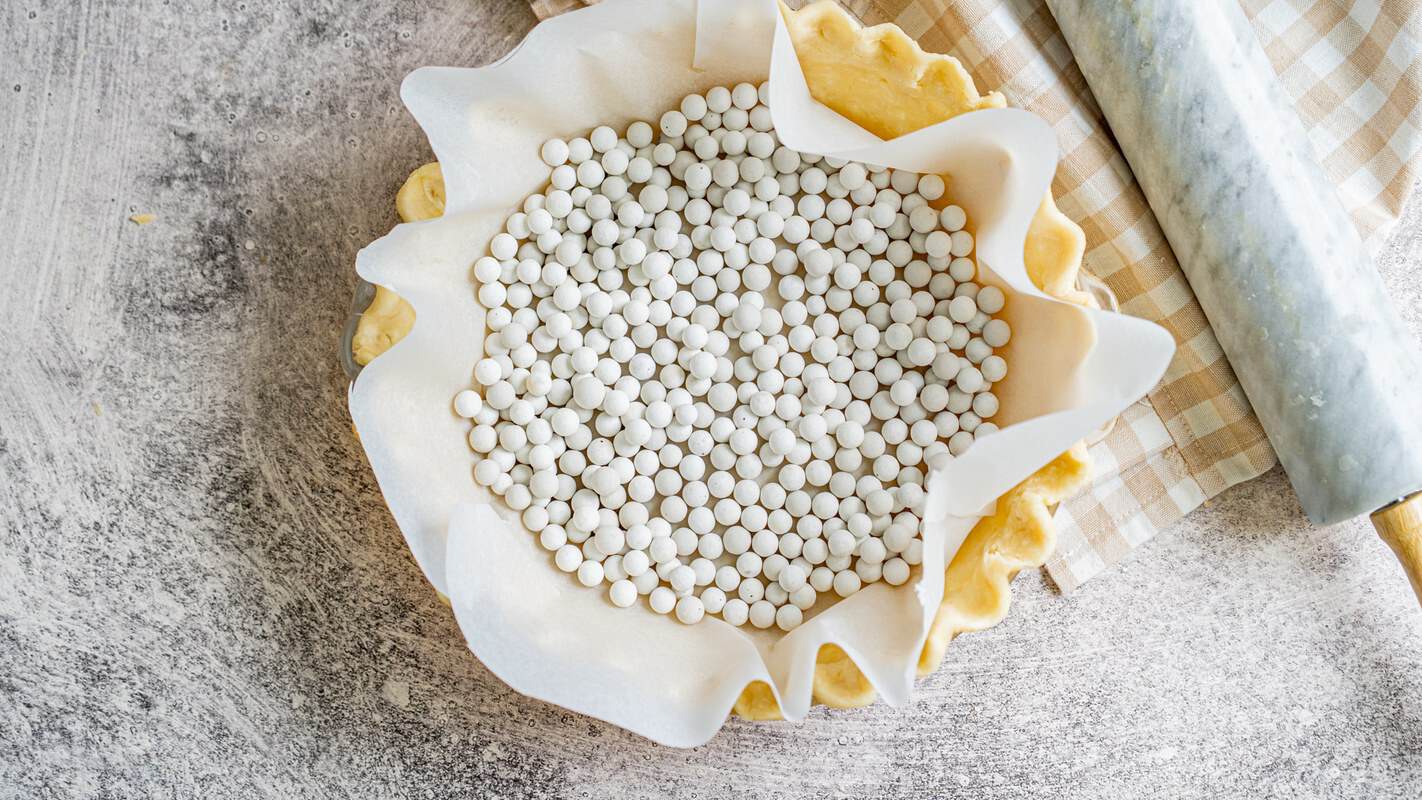
For a pre-baked crust, never skip the pie weights. Line the crust with parchment, fill it with pie weights or 1 to 2 cups of dry beans or rice, and bake at 375 degrees F for 15 to 20 minutes. Lift out the weights, prick the bottom with a fork, and bake 10 to 15 minutes more, until lightly golden. Without weights, the crust slumps and shrinks. A quiche with pie crust, like our Broccoli and Cheddar Quiche or Quiche Lorraine, is a great place to practice. For a shiny, golden edge on a double crust pie, brush it with a simple egg wash of one beaten egg and a splash of milk before baking. Get all the details in our Easy Pie Crust recipe.



 Add us as a trusted site on Google
Follow Me