This post contains affiliate links.
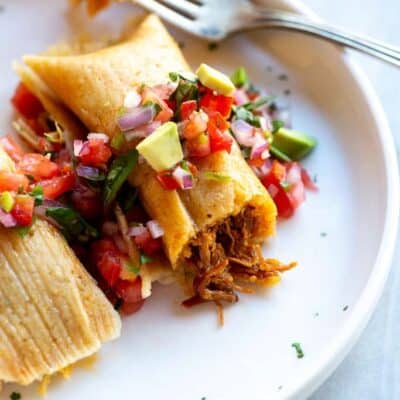
A Simple step-by-step recipe and instructions for making authentic Tamales! Fill them with pork, chicken or beans and cheese and cooked on the stovetop or in the instant pot.
If you’ve been following TBFS then you know that I fell in love with authentic Mexican food while living in Mexico with my husband several years ago. If you love it too, be sure to check out my Authentic Mexican Rice, Cheese Enchiladas, Horchata, and Tres Leches Cake!
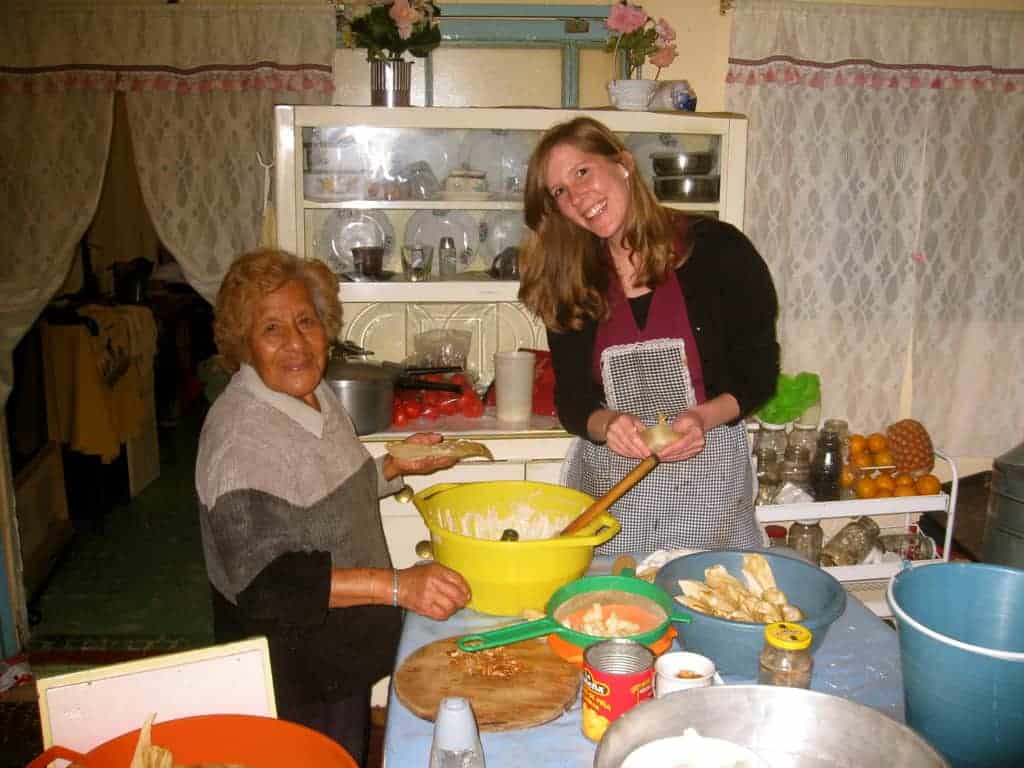
I learned to make homemade tamales many years ago from a sweet elderly woman in Puebla, Mexico. My husband and I were living in Puebla for a few months and became friends with this woman and her family. Her daughter was the secretary at the office building where we worked.
This sweet grandmother made incredible tamales! I expressed my desire to learn the ins and outs of authentic Mexican cooking, so the Grandma invited me over for a “tamalada” or Tamale making party. She made her masa dough completely from scratch, using dried white corn kernels and “cal” , which has been difficult for me to find in the U.S..
What is a tamale?
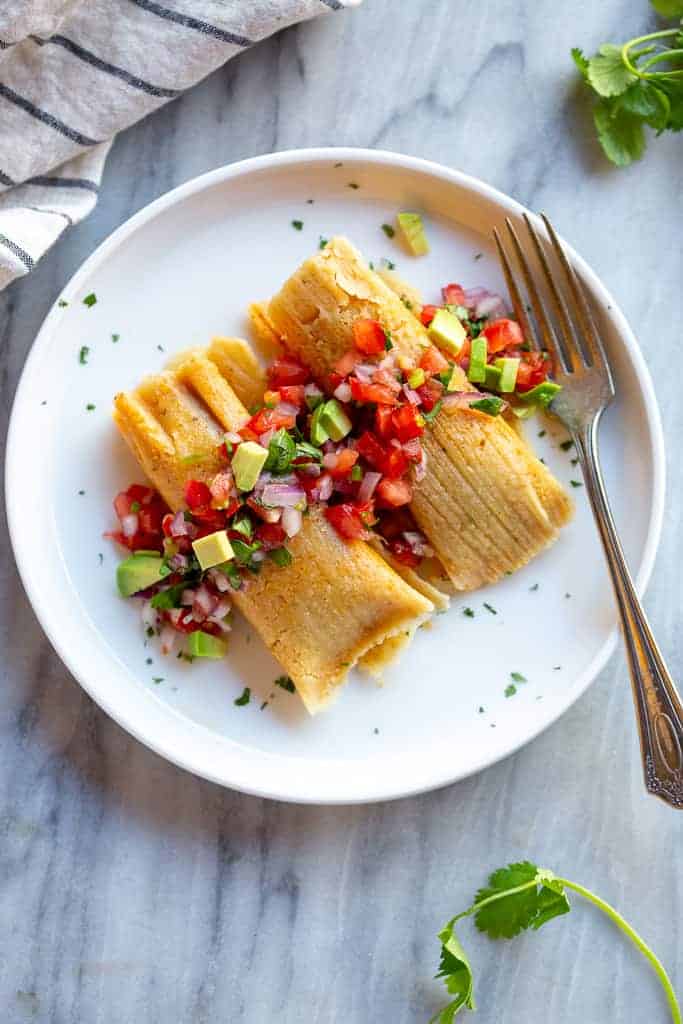
Tamales are a traditional Mexican dish made with a corn based dough mixture that is filled with various meats or beans and cheese. Tamales are wrapped and cooked in corn husks or banana leaves, but they are removed from the husks before eating. Try them served with pico de gallo on top and a side of guacamole and rice.
While making tamales is a process (made very fun with multiple people to help stuff and wrap them!), it’s really simple, so don’t be intimidated! There are just two main elements; the dough, and the filling.
- The dough, called “masa” is spread on the corn husk. The corn husks do not get eaten, they are just used to envelope the dough and filling of the tamale which gets cooked inside.
- The filling. You can fill the tamales with meat or beans and cheese. Find my favorite filling options below!
Ingredients:
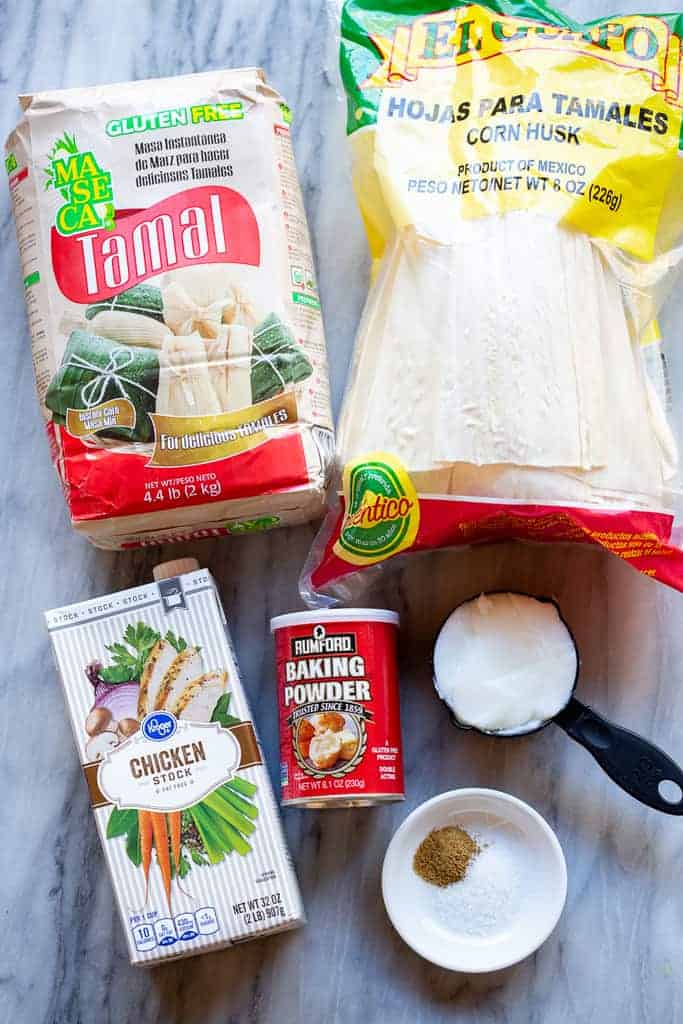
Masa harina: I like the Maseca brand which is a common brand found in the Mexican aisle at the grocery store.
Broth: Beef, chicken or vegetable will work. If using my red chili pork tamale filling, use the leftover broth from the cooked pork.
Baking powder
Salt
Cumin
Lard: lard is used in truly authentic Mexican tamales (and it has less saturated fat then butter)! You can find it in the Mexican aisle at the grocery store, or online. Shortening would work as a substitute.
Dried corn husks: 8 ounce package
How to Make Tamales, Step-by-step:
1. Soak the corn husks. Place corn husks in a bowl of very hot water for 30 minutes or until softened.
2. Prepare desired filling. You’ll need about 3 ½-4 cups of filling for one batch of tamale dough. Some filling options include:
- Salsa verde chicken: 3 ½ cups cooked, shredded chicken mixed with 16 ounce can salsa verde (I like herdez brand)
- Bean and cheese: 15 oz can refried beans and 1 ½ cups shredded mozzarella cheese
- Red chili pork: 1 recipe red chili pork
3. Make the masa dough: In a large bowl, use an electric mixer to beat the lard and 2 tablespoons of broth until fluffy, about 3-5 minutes. Combine the masa flour, baking powder, salt, and cumin in a medium bowl; stir into the lard mixture and beat well with an electric mixer. Add the broth, little by little to form a very soft dough. Beat on high speed for several minutes. The dough should spread like creamy peanut butter and be slightly sticky. Cover the mixing bowl with a damp paper towel, to keep the dough from drying out.
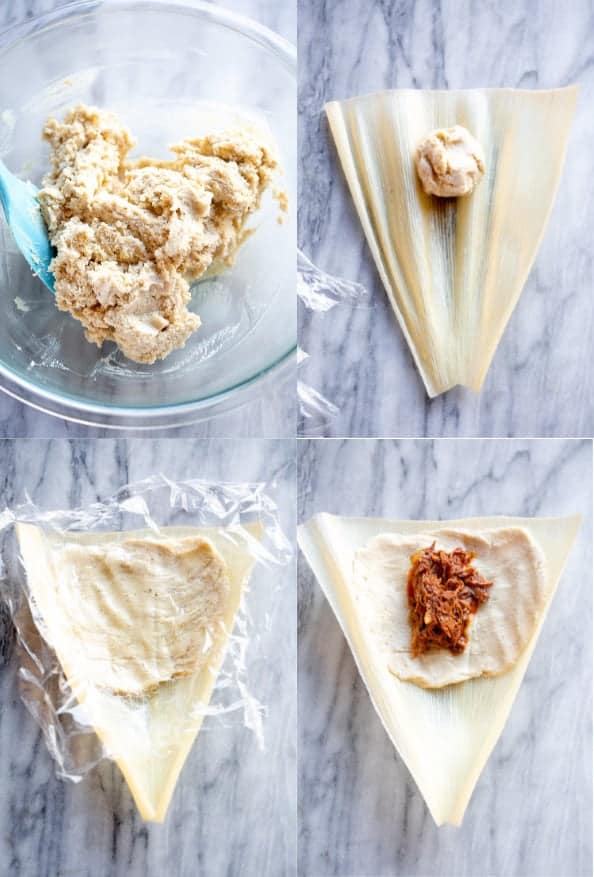
4. Assemble the tamales: Lay a corn husk, glossy side up, on the counter with the wide end at the top. Scoop about ¼ cup of dough onto the top, center of the corn husk. Lay a piece of plastic wrap over the dough and use your hands to press and spread the masa into a thin layer, about ¼ inch thick. Keep the dough spread along the top half of the corn husk to allow plenty of room to fold the bottom husk up, when it’s time.
Place 1-2 tablespoons of desired filling in a line down the center of the dough. (You don’t want too much filling).
Fold-in one long side of the husk over the filling. Fold in the other long side, overlapping the first (like folding a brochure). Fold the bottom of the husk up. Optional: Tear a long strip from an edge of one of the soaked corn husks and use it to tie the tamale, to hold it together.
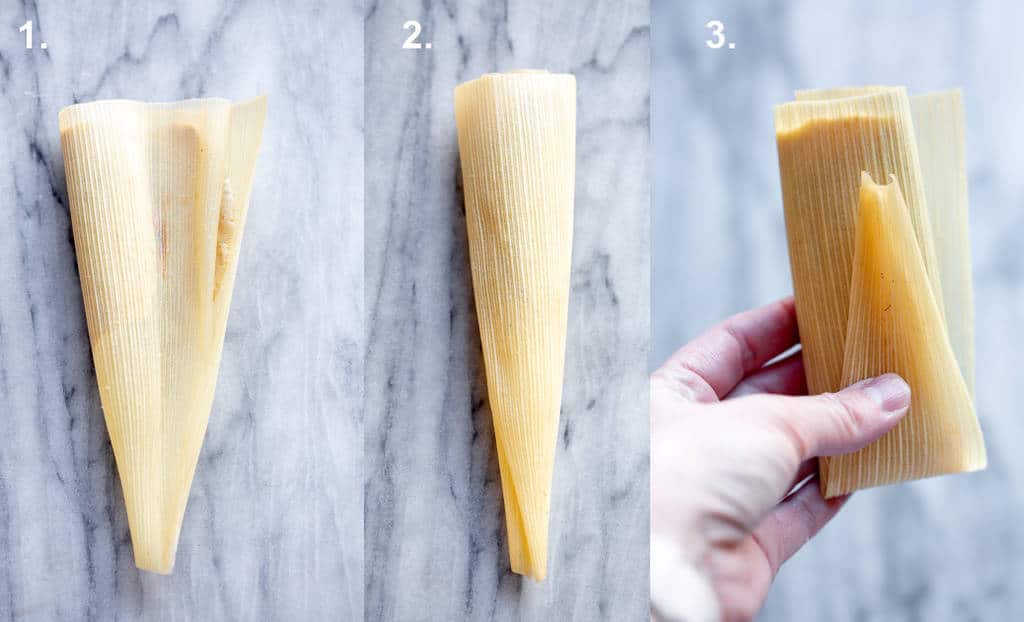
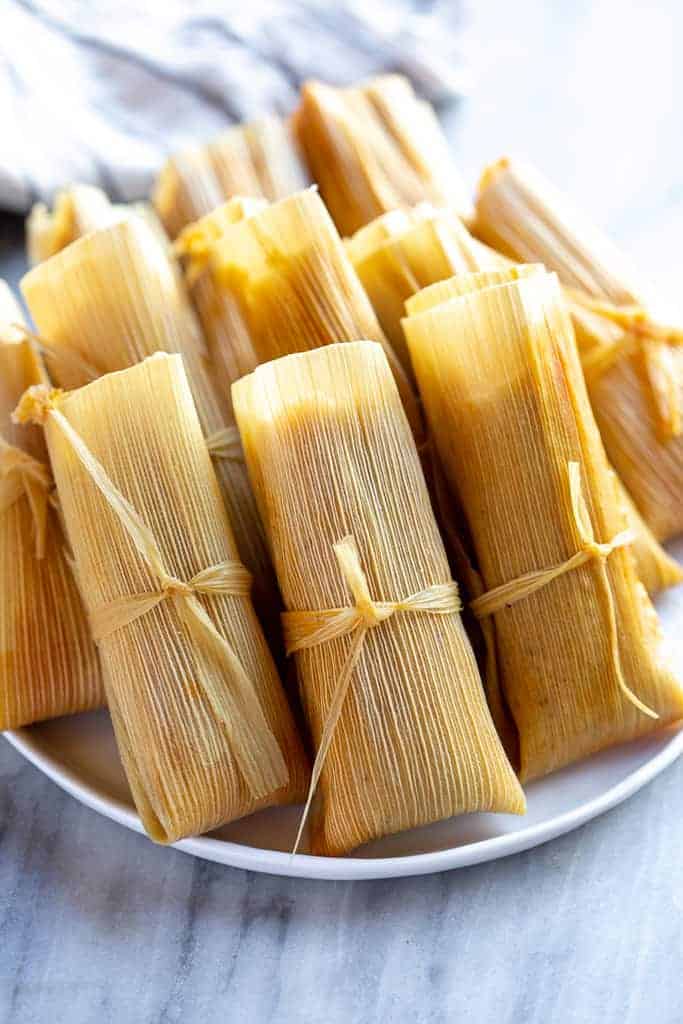
5. Tie the tamales (optional): Tying the tamales can help you differentiate them if making more than one filling. However, you don’t have to tie a corn husk string around them to secure them, as they will hold together without it, stacked upright, side-by-side in the pot.
6. Cook on the stove-top or Instant Pot:
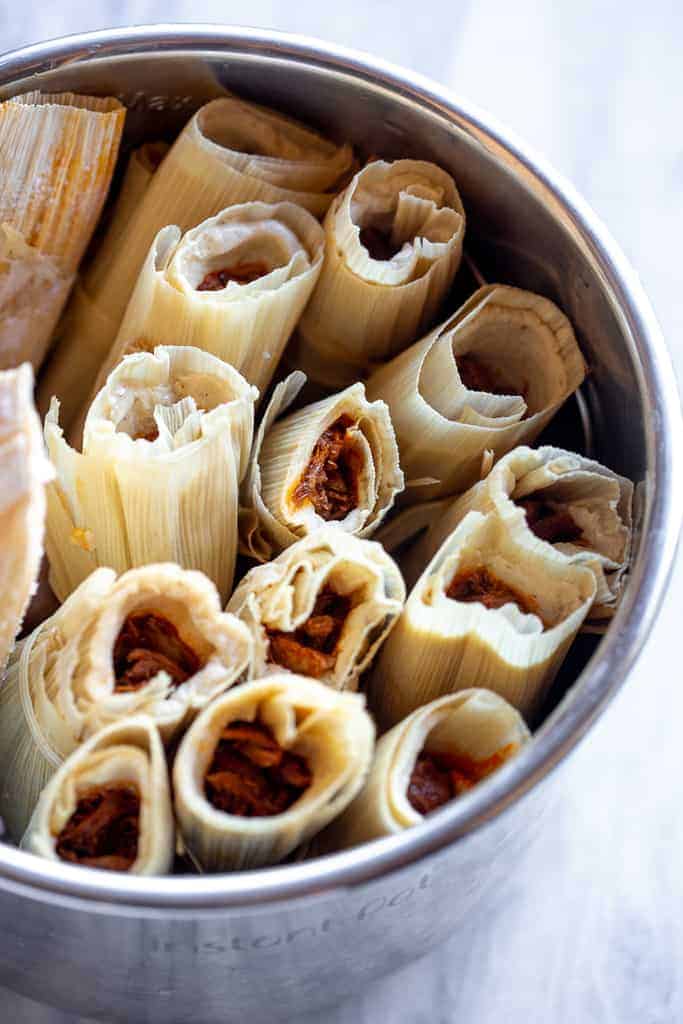
Add water to the bottom of your stove-top steamer or Instant Pot pressure cooker. (About 1 cup for IP and a few cups for a steamer pot—don’t fill above the steamer rack.) Lay a few extra corn husks on the bottom rack to keep the tamales from falling through and any boiling water from directly touching them.
Place tamales standing upright, with the open end up, just tightly enough to keep them standing. If using a steamer, lay a few soaked corn husks or a wet towel over the top of the tamales before closing the lid.
Steamer: Bring water to a boil and once boiling, reduce to a simmer and steam for 1 to 2 hours (or even longer, depending on how many you’re making). Check them after 1 hour. (In Mexico they would often place a coin at the bottom of the steamer and when the coin started to tap in the pot you know the water was low and you needed to add more.)
Instant Pot: Cook on Manual/High Pressure for 25 minutes. Allow pressure to naturally release for 10 minutes, and then quick release.
Freezing and Reheating Instructions:
To freeze tamales: I love making a big batch of tamales to keep in the freezer for busy nights. To freeze them, allow the cooked tamales to cool completely, then stick them in a freezer ziplock bag and freeze for up to 3 months.
To reheat tamales: Wrap leftover or frozen tamales in a few dampened paper towels and microwave until warmed through. The wet paper towels will help them “steam” as they are reheated. Be careful when unfolding them–they will be hot!
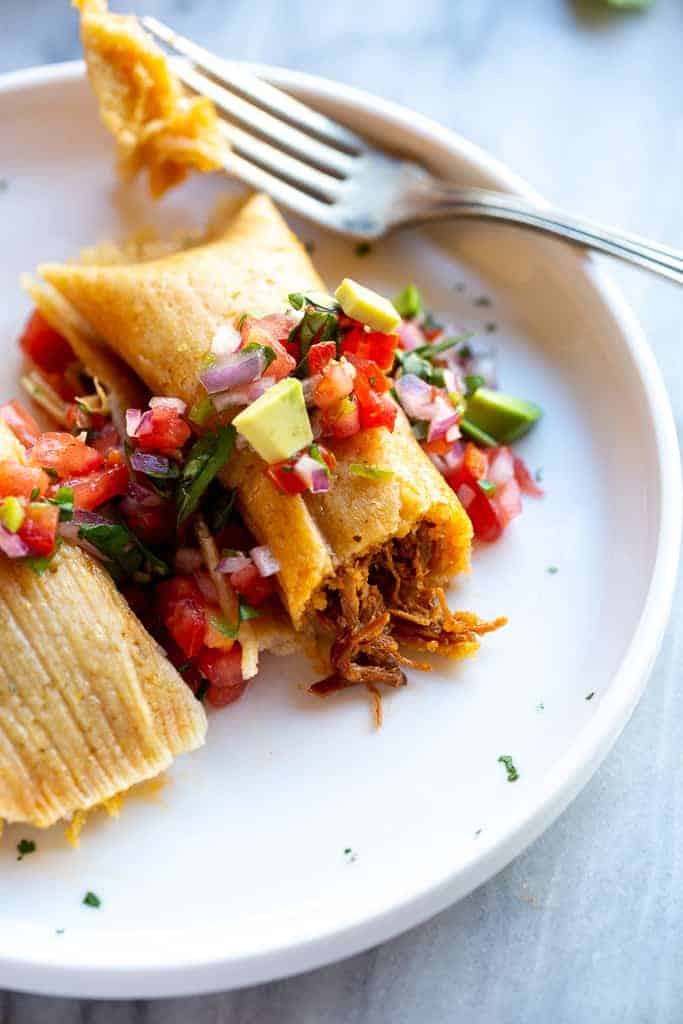
Serve tamales with:
- Toppings: salsa, avocado, sour cream, pico de gallo.
- Authentic Mexican Rice – you’ll be in heaven!
- Homemade Refried Beans
- Easy Homemade Horchata
- or check out all my Mexican recipes!
You can also FOLLOW ME on FACEBOOK, TWITTER, INSTAGRAM and PINTEREST for more great recipes!
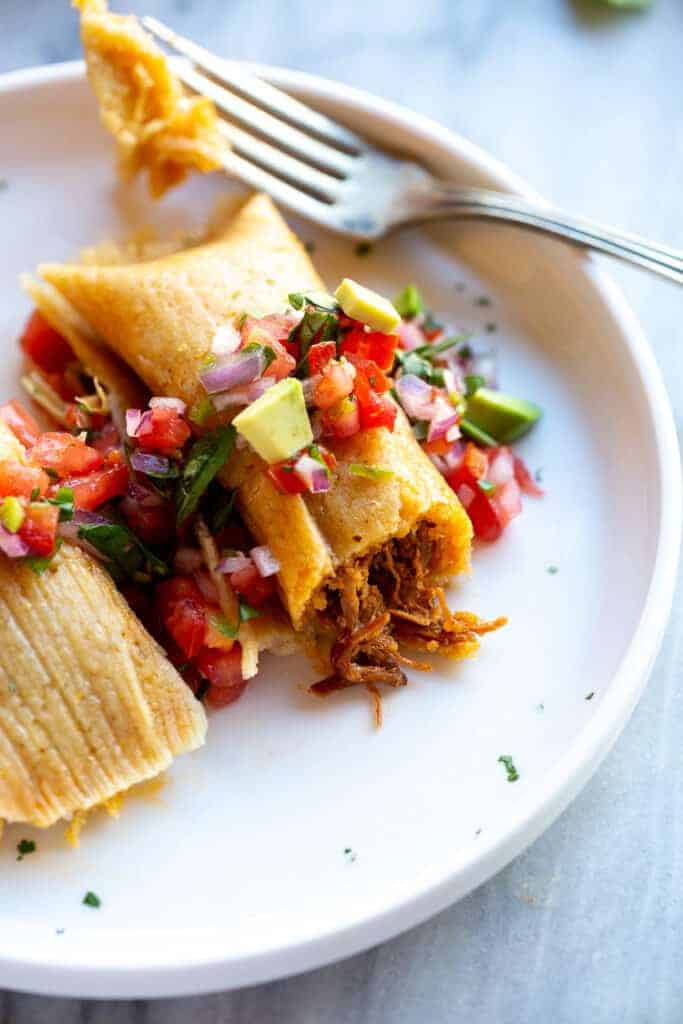
Mexican Tamales
Ingredients
For the Dough:
- 4 cups Masa Harina
- 3 cups broth, (beef, chicken, or vegetable broth)
- 2 teaspoons baking powder
- 1 teaspoon salt
- 1 teaspoon cumin
- 1 1/3 cups lard
- 8 ounce package dried corn husks
Filling ideas:
- Red chili pork
- Salsa verde chicken, See notes for recipe
- bean and cheese, See notes for recipe
- Authentic Mexican Rice, , for serving, optional
Instructions
- Soak the corn husks in a bowl of very hot water for 30 minutes or until softened.
- Prepare desired fillings*.
- Make the tamal dough: In a large bowl, use an electric mixer to beat the lard and 2 tablespoons of broth until fluffy, about 3-5 minutes. Combine the masa flour, baking powder, salt, and cumin in a separate bowl; stir into the lard mixture and beat well with an electric mixer.
- Add the broth, little by little to form a very soft dough. Beat on high speed for several minutes. The dough should spread like creamy peanut butter and be slightly sticky.* Cover the mixing bowl with a damp paper towel, to keep the dough from drying out.
- Assemble the tamales: Lay a corn husk, glossy side up, on the counter with the wide end at the top. Scoop about ¼ cup of dough onto the top, center of the corn husk. Lay a piece of plastic wrap over the dough and use your hands to press and spread the masa into a thin layer, about ¼ inch thick. Keep the dough spread along the top half of the corn husk to allow plenty of room to fold the bottom husk up, when it’s time. Remove plastic wrap.
- Place 1-2 tablespoons of desired filling in a line down the center of the dough. (You
don’t want too much filling). - Fold in one long side of the husk over the filling. Fold in the other long side, overlapping the first (like folding a brochure). Fold the bottom of the husk up.
- Tying tamales (optional): You don’t have to tie a corn husk string around the tamales--it does take more time and they will hold together without it. However, if you’re making multiple fillings, tying ones of a certain kind can help to identify them.
- Cook on the stove-top or Instant Pot: Add water to the bottom of your steamer or instant pot. (About 1 cup for IP and a few cups for a steamer pot—don’t fill above the steamer rack.) Lay a few extra corn husks on the bottom rack to keep the tamales from falling through and any boiling water from directly touching them.
- Place tamales standing upright, with their open end up, just tightly enough to keep them standing. If using a steamer pot, lay a few soaked corn husks or a wet towel over the top of the tamales before closing the lid.
- Steamer: Bring water to a boil (in Mexico they would often place a coin at the bottom of thesteamer and when the coin started to tap in the pot you know the water was boiling.) Once boiling, reduce to a simmer and steam for 45 minutes to 1 hour, or longer. Check them after 45 minutes.Instant Pot: Cook on Manual/High Pressure for 25 minutes. Allow pressure to naturallyrelease for 10 minutes, and then quick release.
- To test if the tamales are done: Remove one and try to pull the husk off. If the husk pulls away cleanly from the tamale they're done. If the dough is still sticky or wet looking, cook them for 5-10 minutes longer and try again.
- Store leftover tamales in the refrigerator for 5-7 days depending on the freshness of your ingredients.
Notes
- Salsa verde chicken: 3 ½ cups cooked, shredded chicken mixed with 16 ounce can salsa verde (I like Herdez brand)
- Bean and cheese: 15 oz can refried beans and 1 ½ cups Oaxaca or shredded mozzarella cheese
- Red chili pork: 1 recipe red chili pork
Nutrition
Nutrition information is automatically calculated, so should only be used as an approximation.
Text me new recipe ideas!
Simple, tasty ideas sent once a week. No spam.
I originally shared this recipe October 2017. Updated February 2020 with new process photos and clearer instructions.
Have you tried this recipe?!
RATE and COMMENT below! I would love to hear your experience.



I just made tamales today for the first time. Your recipe was easy to follow and they turned out so tender and delicious!
These are a lot of work, but SO worth it! I’ve made them at least 5 times now. They are delicious and moist (dry tamales are the worst). Thank you for sharing such a great recipe.
These were amazing! Thank you!!
I’m so happy you liked them! Thanks for coming back to comment!
Can I suggest you NOT use maseca – this is why:
https://www.organicconsumers.org/blog/maseca-flours-test-positive-weedkiller-and-gmos-what-should-consumers-do
There are great organic alternatives. I use Goldmine and I also use avocado oil instead of Lard. If you want to make them from truely from scratch you can buy the maize from your local coop store.
Thank you so much Maria for the very important information. I didn’t have any idea. Again, I really appreciate it and thank you for taking the time and caring enough to share.
Are these spicy? I love tamales but cannot tolerate anything to spicy.
Hi Wendy,
The red sauce is a little spicy. The green sauce just uses a store bough salsa verde so you could use a mild version!
Hi Wendi,
I’m in the same boat. Growing up, my grandmother would make 3 kinds of tamales, including just cheese for the kids. As we got older, more of us grand kids would eat the hotter tamales, except for me, the second oldest, and the little one. Like Lauren, she made the masa by scratch, adding creamed corn to the masa; it kept the tamales moist and it made for a stronger corn flavor. The cheese was always longhorn cheese and it was cubed, not shredded. I can’t wait to try Lauren’s recipe and tweak it to add the creamed corn and longhorn cheese. Good luck!
I have eaten tamales that the masa has a little reddish color what can I add to the masa it also has great flavor.
Masa with a reddish color comes from using the broth from the pork roast, which traditionally has chili added to it for cooking. You can also add some chili powder to your masa while mixing it.
We make these all the time! They are amazing!! Thank you for sharing this recipe.
Hi. I don’t know if some already made the clarification but “masa” is “dough” in spanish, is not that the dough is actually called “masa”. Now, I’m from Costa Rica and we made our tamales with a dough season with a heavy seasoned pork broth, and filled with vegetables, rice and pork, poached in a banana leaf, traditionally for christmas, but we also have a smaller, simpler version called “tallullo”, made with corn dough too but filled with sweetened bean paste.
Your page does not allow me to print the Sauce recipes because it opens only the first page of you recipe. Looks really authentic but I need the recipe for reference. Thanks, Carol
I live in San Diego CA and I know first hand that there are as many masa recipes as there are families who make traditional tamales every Christmas. So if you ever plan on doing “sweet” tamales (usually made of sugar, pineapple, raisins etc.) you can add cinnamon, nutmeg, all spice etc. to give your maza a slightly different flavor that is always a favorite during the Holidays.
Thanks for the tips!
they came out great thank you for sharing. My sister and I had a great time making this tamale recipe.
A great recipe to make with a friend, especially a sister 🙂 So happy you enjoyed them! Thanks for your comment
same same i cant agree more
kissanime – gogoanime
The chemical lime in the form of Calcium Hydroxide (aka Edible Lime, Hydrated Lime, CaH2O2) is used in some food processing, and has been for millennia. Lime (in the form of Calcium Hydroxide) is used in Mexico, Central America and South America in processing corn. Corn is soaked in water to which Calcium Hydroxide has been added.