This post contains affiliate links.
A simple tutorial on How to Can Tomatoes with a water bath or steam canner, so you can enjoy fresh summer tomatoes all year long.
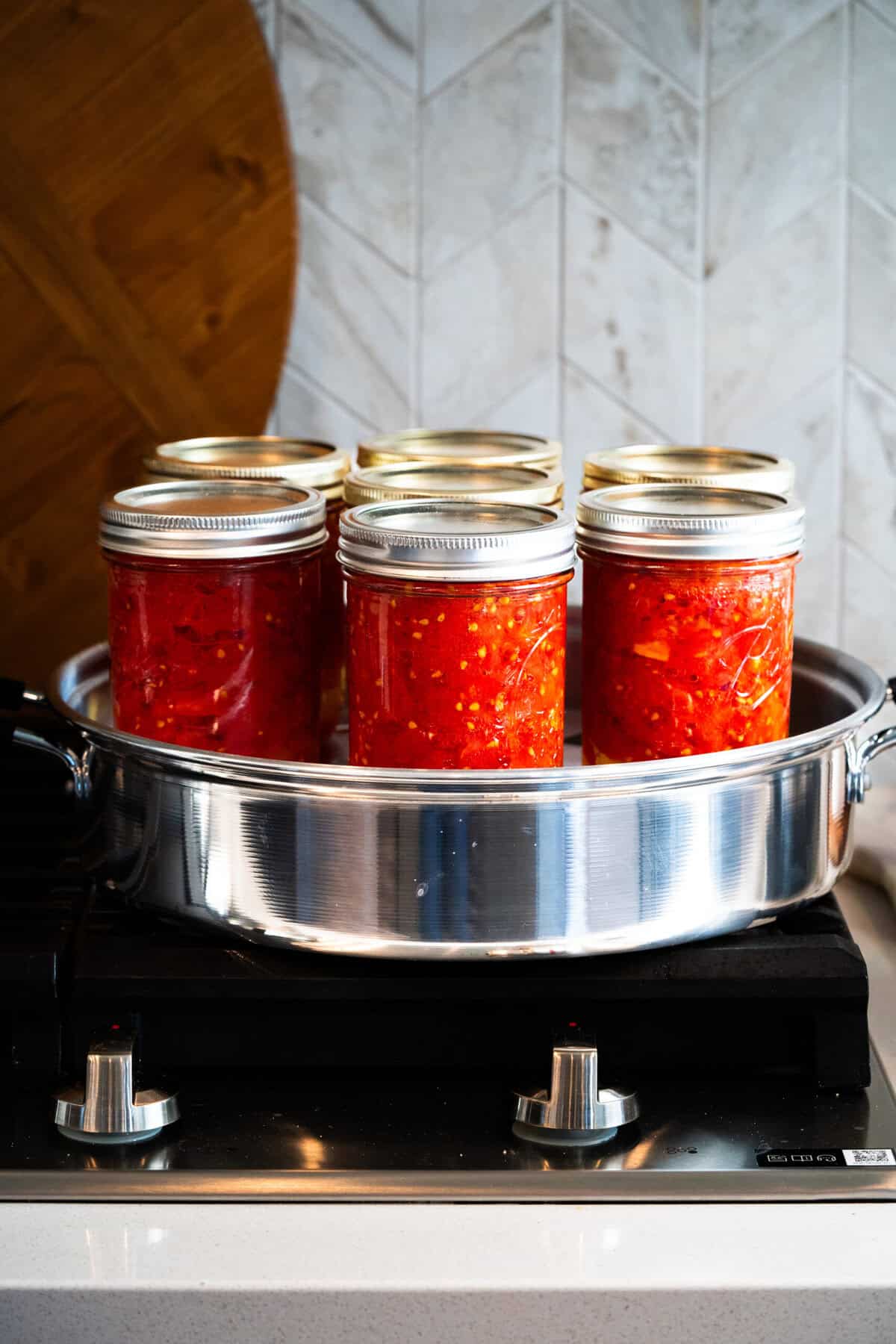
 How to Can Tomatoes for the best flavor upgrade, and easiest pantry staple!
 How to Can Tomatoes for the best flavor upgrade, and easiest pantry staple!
All you need is tomatoes, lemon juice and salt, and you can preserve your high-quality tomatoes to enjoy all year long! I love canning diced tomatoes in pint jars to use in place of a 14.5 oz can of diced tomatoes, but you could also leave the tomatoes whole. Use a steam canner (which I think is the easiest), or a water-bath canner.
Then you can use the best canned tomatoes in homemade chili, lasagna, pastalaya, slow cooker chicken tikka masala, taco soup, lentil soup, or any recipe that uses them! And if you love canning, try my other canning recipes, like Canned Peaches, Applesauce and Strawberry Jam!
Equipment needed:
- A large steam canner or water-bath canner with racks (for processing the jars)
- 6 quart jars, sterilized
- New lids and rings
How to Can Tomatoes:
Sterilize Canning Jars and Prep Lids: You run jars through a dishwasher cycle on high heat, or wash jars in hot soapy water, and then sterilize jars by placing them in a boiling water canner filled with water and boil for 10 minutes.
Place lids (not rings) in a bowl and pour boiling water over them. Let them sit until ready to use (this softens the sealing compound).
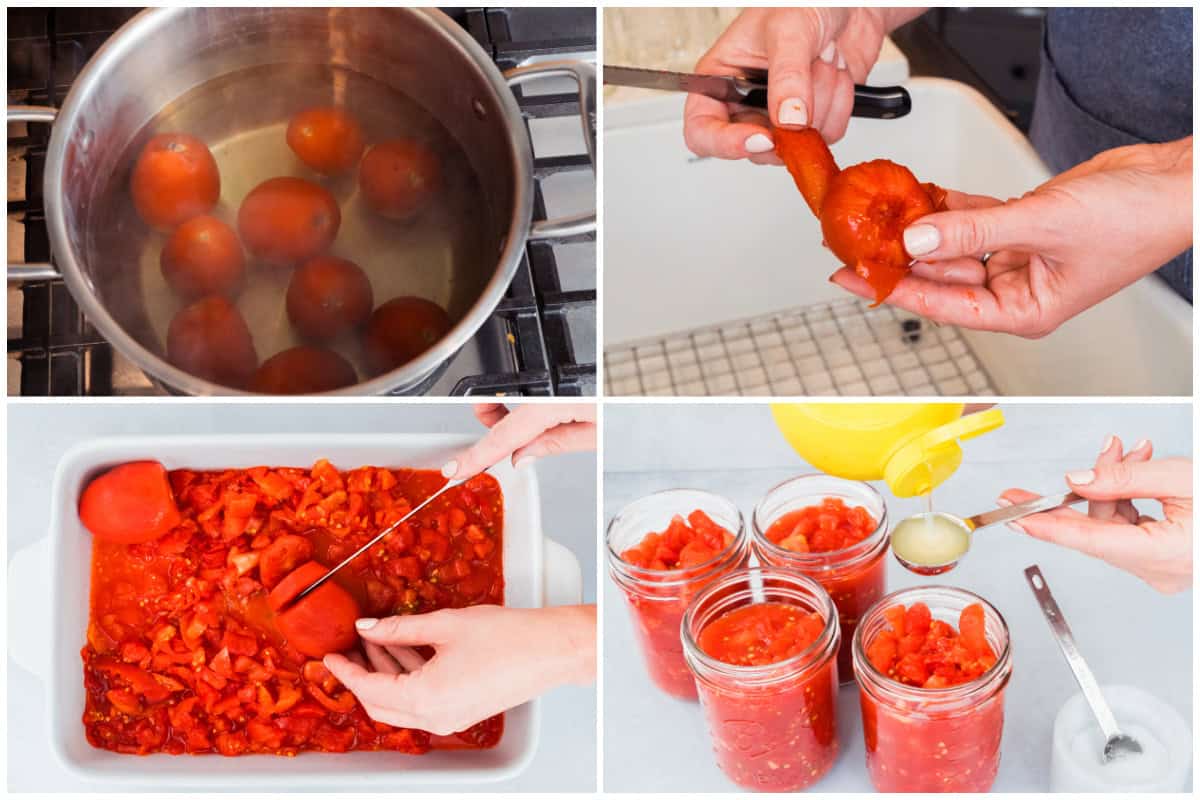
Blanch Tomatoes: Bring a large pot of water to boil. Add tomatoes and blanch for 1–2 minutes, just until the skins begin to split. Transfer tomatoes immediately to a bowl of ice water to cool quickly. Peel skins off with your hands or a paring knife.
Fill Jars: Chop peeled tomatoes with a knife (or leave whole/halved if you prefer) and pack them into hot, sterilized jars. Leave ½ inch headspace at the top.
To ensure proper acidity and safe preservation:
- Add to each pint jar: 1 tablespoon bottled lemon juice (or ¼ teaspoon citric acid).
- Add to each quart jar: 2 tablespoons bottled lemon juice (or ½ teaspoon citric acid).
- Optional: Add ½ teaspoon salt per pint (1 teaspoon per quart) for flavor.
Wipe jar rims clean with a damp paper towel. Place lids on and screw bands on until fingertip tight.
Process:
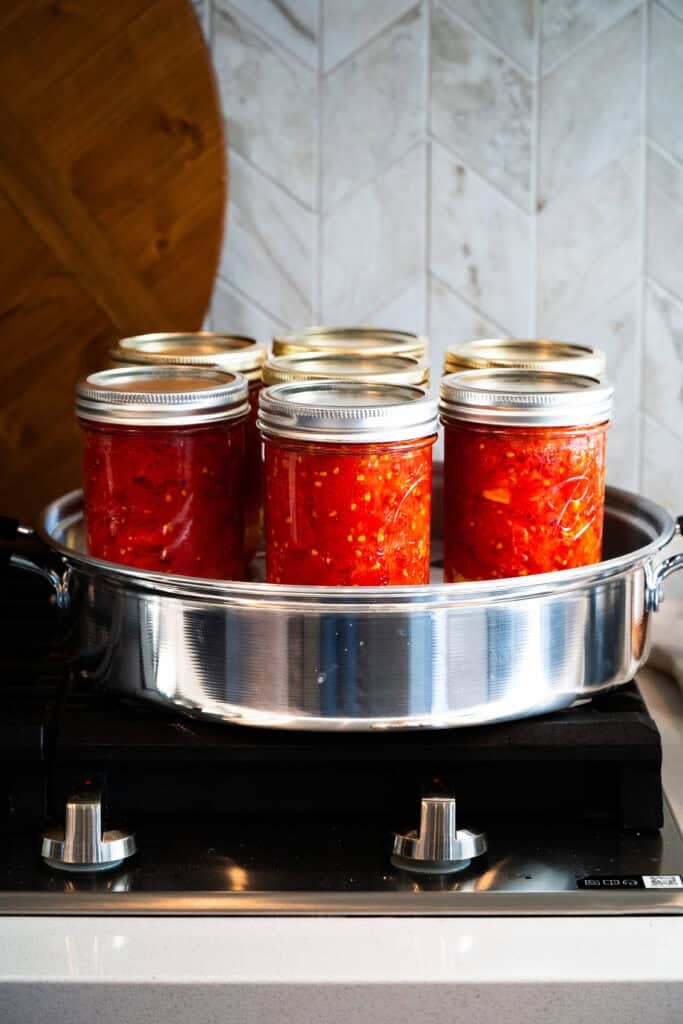
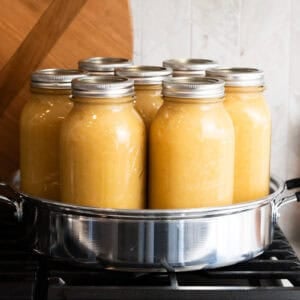
For a Steam Canner: Add water to the base (just below the rack). Place jars on the rack (usually up to 7). Cover with the lid and heat on medium-high until a steady stream of steam escapes.
For a Water-Bath Canner: Place filled jars on the rack inside the canner. Cover jars with at least 1–2 inches of boiling water. Cover with lid and bring back to a gentle, rolling boil. Begin timing once water is boiling.
Processing Times:
- Pints: 40 minutes (sea level–1,000 ft)
- Quarts: 45 minutes (sea level–1,000 ft)
Adjust for Elevation:
- 1,001–3,000 ft: add 5 minutes
- 3,001–6,000 ft: add 10 minutes
- 6,001–8,000 ft: add 15 minutes
- 8,001–10,000 ft: add 20 minutes
Remove and Rest: Carefully remove jars with a jar lifter and place on a towel-lined counter. Do not tilt jars. Let them sit undisturbed for 12–24 hours. Check Seals: lids should be concave and not flex when pressed. If a jar did not seal, refrigerate it and use within a week.
Store: Label sealed jars with the date and store in a cool, dark place. Properly sealed jars of canned tomatoes will last for 12–18 months (at best quality), and are often safe eating even longer than that.
How do I know if my canned tomatoes are safe to eat?
Always make sure your mason jars do not show signs of leaking or rusting. Press down on the center of the lid: it should not pop back. If it sits flat it is safe, but if it pops back, it has not.
Canning Tomatoes
Equipment
- Steam Canner , or
Ingredients
- 14 lbs Roma tomatoes* (or other low-moisture tomatoes)
- Lemon juice
- Salt
Instructions
- Sterilize Canning Jars and prep lids: You can run jars through a dishwasher cycle on high heat, or wash jars in hot soapy water, and then sterilize jars by placing them in a boiling water canner filled with water and boil for 10 minutes.Place lids (not rings) in a bowl and pour boiling water over them. Let them sit until ready to use (this softens the sealing compound).
- Blanch tomatoes: Bring a large pot of water to boil.Add tomatoes and blanch for 1–2 minutes. Transfer tomatoes immediately to a bowl of ice water to cool quickly. Peel skins off with your hands or a paring knife.14 lbs Roma tomatoes* (or other low-moisture tomatoes)
- Fill Jars: Chop peeled tomatoes (or leave whole/halved if you prefer) and pack them into hot, sterilized jars. Leave ½ inch head space at the top.For pint jars add 1 tablespoon bottled lemon juice (or ¼ teaspoon citric acid) and ½ teaspoon salt. For quart jars: 2 tablespoons bottled lemon juice (or ½ teaspoon citric acid). and 1 teaspoon salt.Lemon juice, Salt
- Apply lids: Run a small spatula along the inside edges of the jars to remove an air bubbles. Wipe jar rims clean, place lids on and screw bands on (not too tight).
Process Jars:
- For a Steam Canner:Add water to the base (just below the rack). Place jars on the rack (usually upto 7). Cover with the lid and heat on medium-high until a steady stream ofsteam escapes.
- For a Water-Bath Canner:Place filled jars on the rack inside the canner. Cover jars with at least 1–2inches of boiling water. Cover with lid and bring back to a gentle,rolling boil. Begin timing once water is boiling.
- Processing Times:Pints: 40 minutes (sea level–1,000 ft) Quarts: 45 minutes (sea level–1,000 ft)Adjust for Elevation:1,001–3,000 ft: add 5 minutes 3,001–6,000 ft: add 10 minutes 6,001–8,000 ft: add 15 minutes 8,001–10,000 ft: add 20 minutes
- Remove and Rest: Carefully remove jars with a jar lifter and place on a towel-lined counter. Do not tilt jars. Let them sit undisturbed for 12–24 hours. Check seals: lids should be concave and not flex when pressed. If a jar did not seal, refrigerate it and use within a week.
- Store: Label sealed jars with the date and store in a cool, dark place. Properly sealed jars of canned tomatoes will last for 12–18months (at best quality), and are often safe eating after even longer than that.
Notes
Nutrition
Nutrition information is automatically calculated, so should only be used as an approximation.
Text me new recipe ideas!
Simple, tasty ideas sent once a week. No spam.
Follow Me
I originally shared this recipe July 2013. Updated May 2020 and September 2025 with new photos and clearer instructions.

Hi
If I recall this is exactly what I had done to make my homemade canned tomatoes however and letting them sit for while or a few days later I went tried one but tomatoes taste quite lemon flavoured. Are they supposed to taste that way
I did use the roma tomatoe
please advise as in all of the recipes I have found for making homemake whole tomatoes or cut up tomotes the receipe calls for lemon juice
jar size was the 1 pint and 1 litre size
if they are supposed to be that way than I am fine but if they aren’t than I will be putting them in to the garbage, I have even let them sit for much longer now as I think I make them 2 years ago. and they are stored in a dark cabinet
same with my tomatoe sauce I made as well using a receipe which called for lemon juice as well as the other ingredients like onion, celery, and basil that sauce tastes a bit lemony as well which again I used roma tomotoes and followed the receipe from the canning books I purchased that specialize in canning reciepes Bernard’s if I recall
thanks
annette
Hi Ann, an acid, like lemon juice, is required in canning tomatoes to create safe ph levels for canning. I would suggest https://www.freshpreserving.com/ as a resource to understand this further.
Just read this post, and I am super excited to bottle my tomatoes. I just got home from POWWOW and I now have a ton of tomatoes. I just got married less than a year ago, so it’s just my husband and myself at home and there’s no way we’ll eat all these tomatoes, so I’m looking forward to trying my hand at bottling them. Thanks for the tutorial!
Thanks Heather, hope they turn out perfect 🙂
It seems like every time i can jam,i can’t get it to set.
It’s runny. Wondering what i am doing wrong.
Thank you.
You make it look easy! I am new to canning – just this summer. So far, I have made strawberry jam, apricot jam, and canned peaches. Tomatoes are next on my bucket list and you have just inspired me to try it this weekend.
That’s so great! Sounds like you’re on a roll 🙂 Hope you love the canned tomatoes!
what if i forgot to put the salt in will it hurt the tomaooes
That’s not a problem, the salt just adds flavor 🙂
Hi, Roma tomatoes aren’t available locally UK. Can you suggest another type of tomato to use or and type NOT to use if that’s easier. Thank you
Hi Belinda, any type of tomatoes should work but the less watery the better, that’s why I like Roma tomatoes best. Good luck!
Could I use lime juice?
That’s a good question–I’m not sure if lime juice has the same (or enough) acidity to get the tomatoes to the same safe PHzone needed for canning. I would read up on canning safety or try to google it…
I am in the process of canning….I am doing pints and quarts of tomatoes, the pints have a little buckle in the lid, do you have any idea? They are still cooling so we will see…
Hi Melanie, I would allow them to rest for several hours and then check the lids again–sometimes the lids will pop and seal as they sit.
I absolutely agree with Sophie on her previous points….following the National Center for Home Food Preservation or USDA is the best way to go for canning with optimum safety in mind for your family and others. I would like to add that the lemon juice should be added at 1 Tbs per pint OR 2 Tbs per quart….according to the National Center for Home Food Preservation. Also, checking with your local university Cooperative Extension Service for up to date canning guidelines would be helpful too. There is no way I would take risks in home canning….
A couple of things to consider when canning tomatoes. First, the USDA says it is unsafe to use a steamer canner for anything except high acid jams and jellies. Second, the canner pot can be filled with hot water but it should not be brought to boiling before the jars of cold tomatoes are put in. To correctly process the core temperature of the tomatoes must reach a certain temperature for a length of time. The processing time is actually shortened by putting the jars into boiling water and re quired internal temperature may not be reached for the right lenghth of time. When in doubt always refer to a recognized authority such as the National Center for Home Food Preservation.
http://nchfp.uga.edu/how/can_03/tomato_intro.html