This post contains affiliate links.
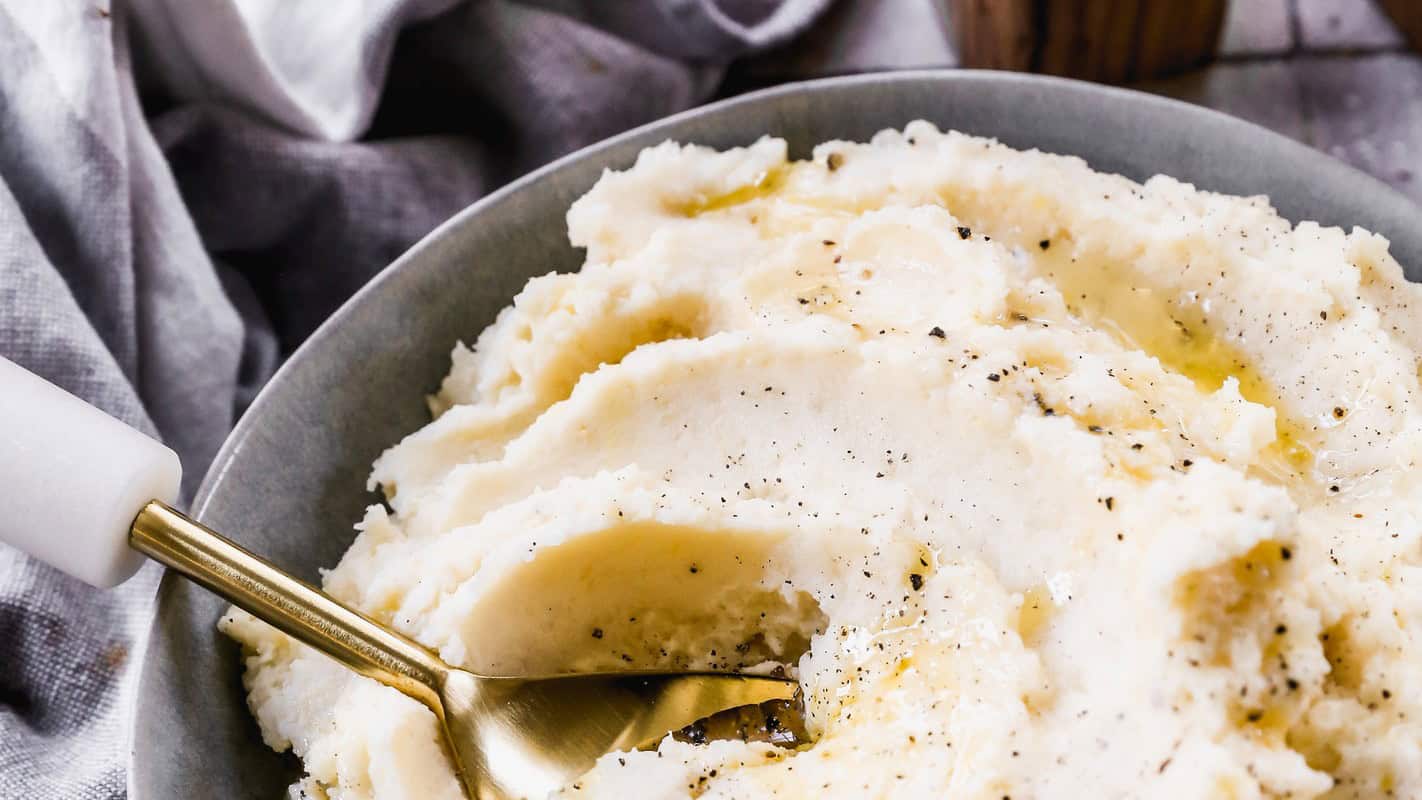
Mashed potatoes look like the simplest dish on the Thanksgiving table, which is exactly why small slip-ups show. Gluey, watery, lumpy, or bland, most disappointing batches come down to a handful of habits that are easy to change. Our Mashed Potatoes recipe has a 5-star rating from more than 200 readers, and it takes about 30 minutes with 5 medium potatoes, butter, evaporated milk, sour cream, and a spoonful of chicken bouillon paste.
Here are the six mistakes we see most often, even from cooks who make a great turkey, plus the simple fixes that get you fluffy, creamy potatoes every time.
Using the wrong potatoes
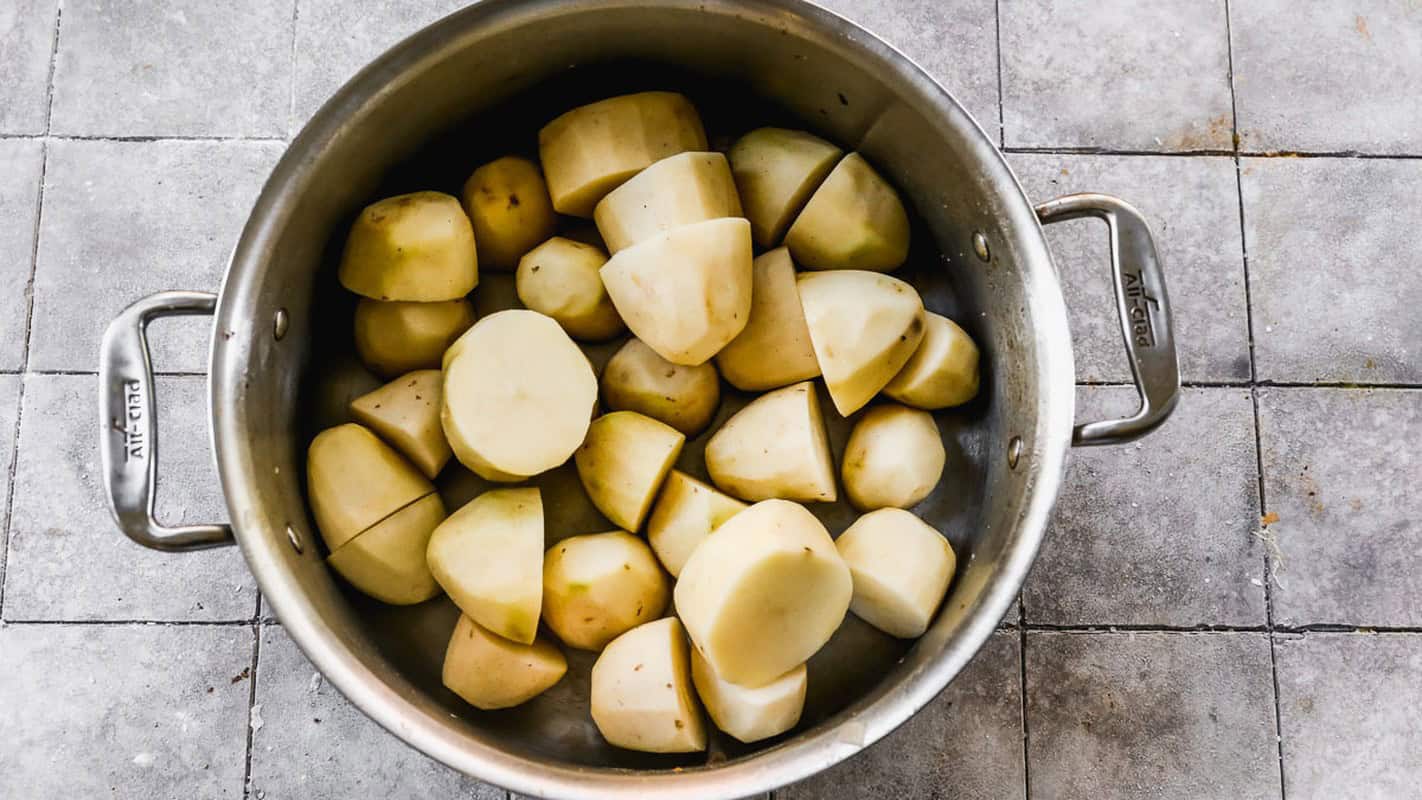
The best potatoes for mashed potatoes are Russet or Yukon Gold. Both are starchy enough to break down into a light, fluffy mash, and Yukon Golds add a naturally buttery flavor. Red potatoes will work, but they give you a thicker, chunkier mash, and fingerling potatoes are best saved for roasting.
Whichever you pick, choose firm potatoes with no sprouts and no green patches on the skin. You can peel them or leave the skins on for a more rustic bowl. Our recipe calls for 5 medium potatoes, which serves 6.
Boiling them too long (and skipping the steam)
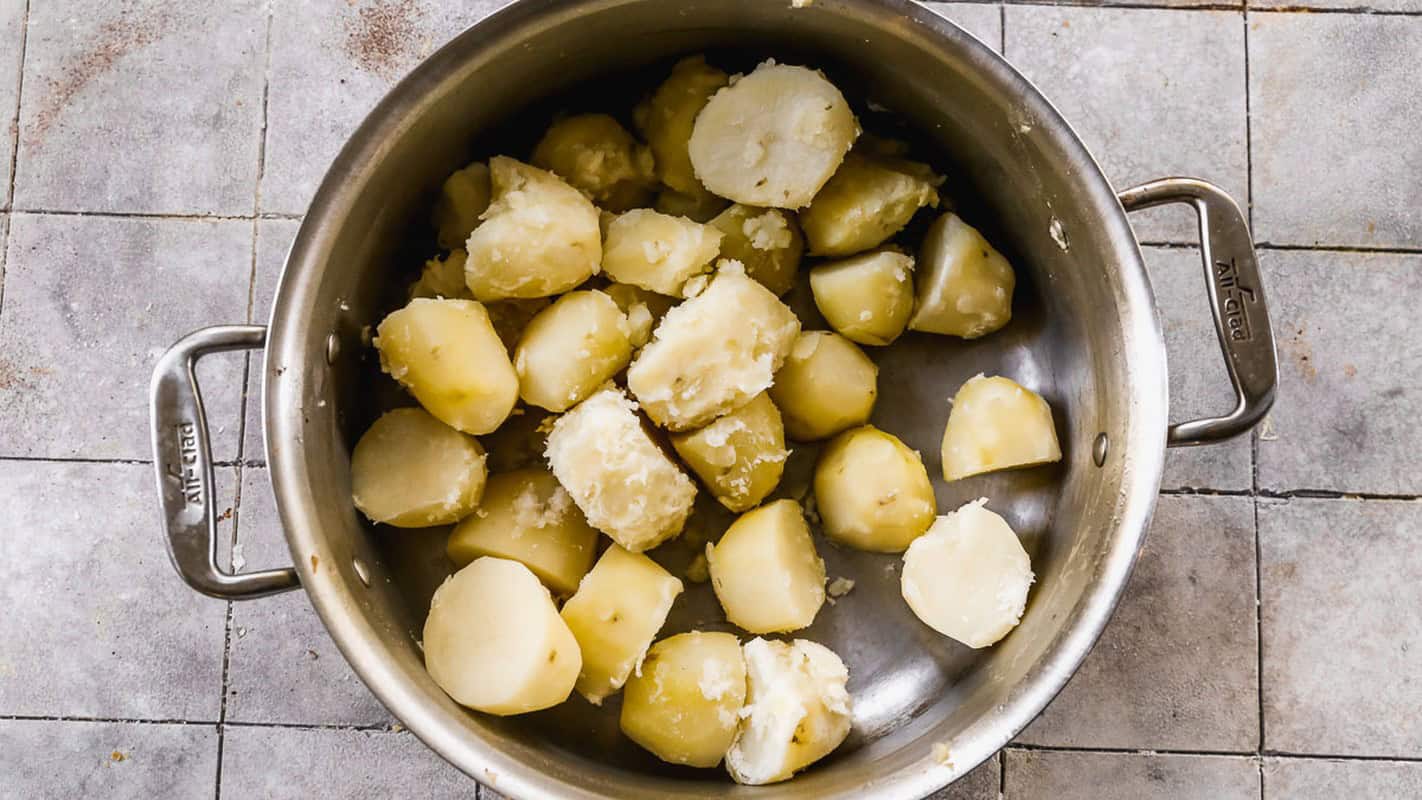
How long to boil potatoes for mashing? Cut them in half, set them in a large pot with about 4 inches of water (they don’t need to be completely covered), put the lid on, and cook for about 15 to 20 minutes, just until a fork slides in easily. You want them tender, not mushy or falling apart. Potatoes that cook too long soak up water, and that water ends up in your mash.
The step most people skip comes next. Drain the water completely, then leave the potatoes in the hot pot with the lid on for about 10 minutes. The steam dries them out, which is what makes them extra fluffy instead of heavy.
Adding cold butter and milk
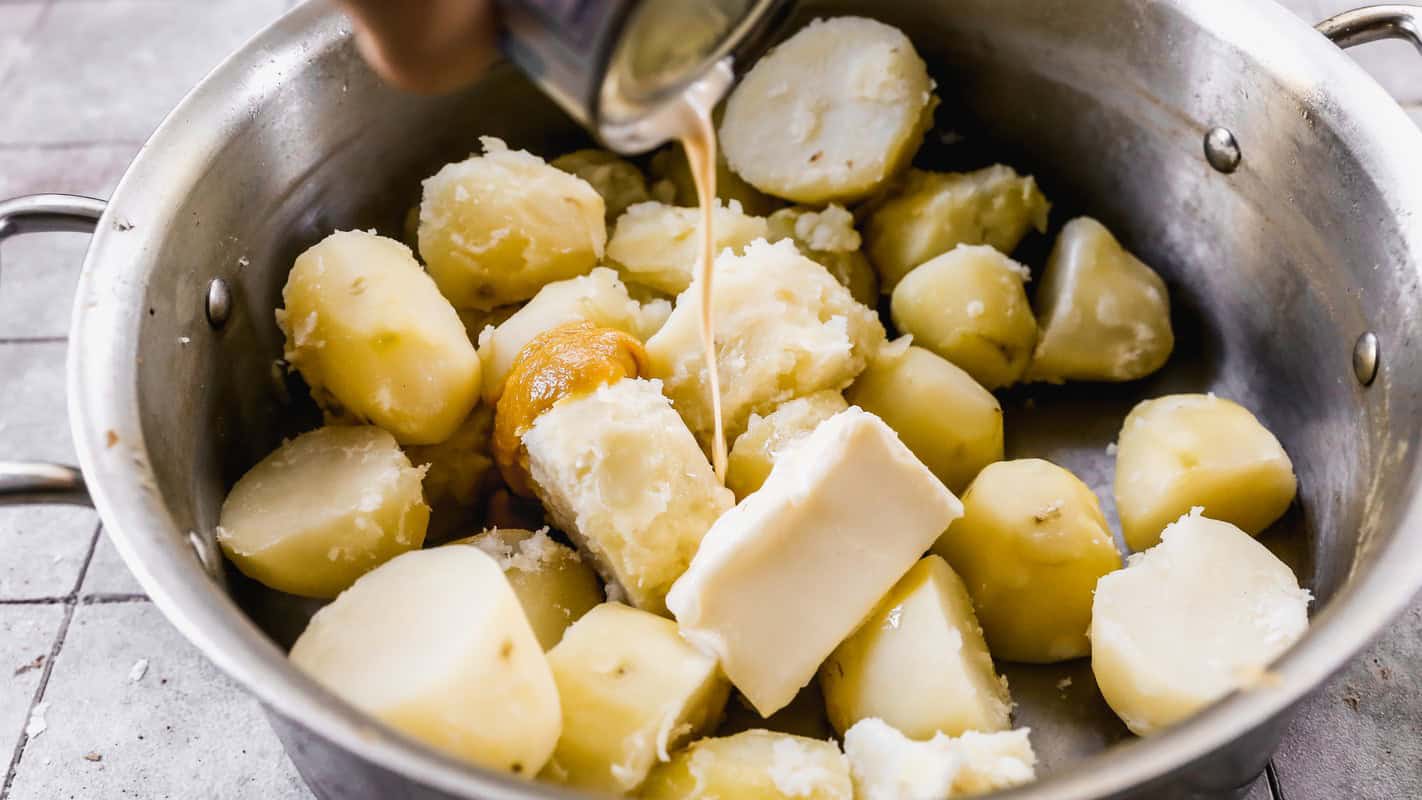
Cold dairy straight from the fridge cools the potatoes down and doesn’t blend in as smoothly, so you end up mashing longer to get rid of lumps. Our recipe uses ¼ cup of room-temperature butter and ½ to ¾ cup of warmed evaporated milk, added right to the pot after the potatoes have steamed.
Evaporated milk is our go-to because it makes the potatoes rich and creamy without watering them down, but warm cream or half and half work too. Start with the smaller amount of milk and add more only if you need it.
Overmixing them
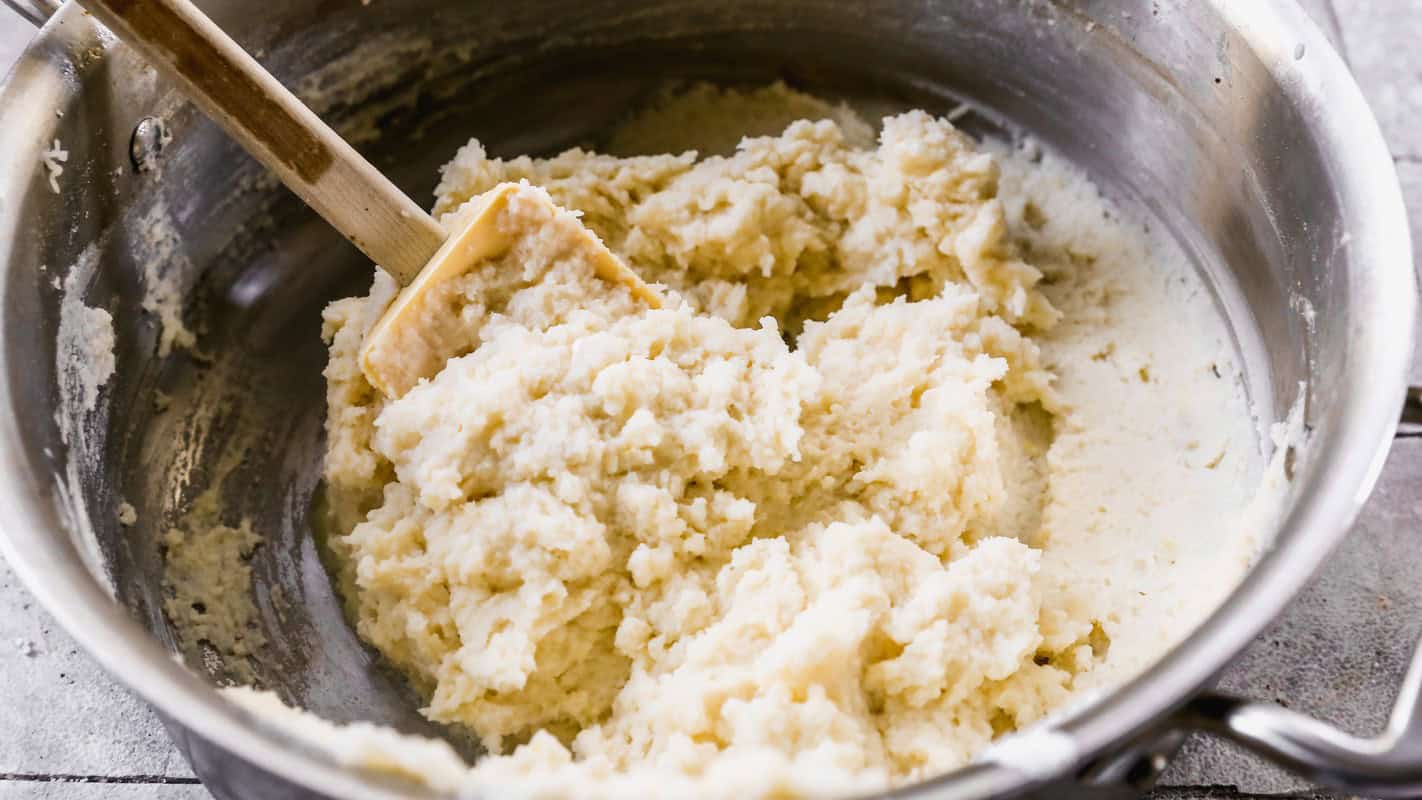
This is the mistake that turns mashed potatoes gummy. The more you work cooked potatoes, the more starch they release, and that starch is what makes them gluey. Mash them first with a potato masher. If you want them extra smooth, beat them with an electric mixer on medium speed for just a few seconds, only until they look light and fluffy, then stop.
If you’d rather skip the masher altogether, our Instant Pot Mashed Potatoes are a hands-off option that frees up a burner on a busy holiday.
Forgetting to season as you go
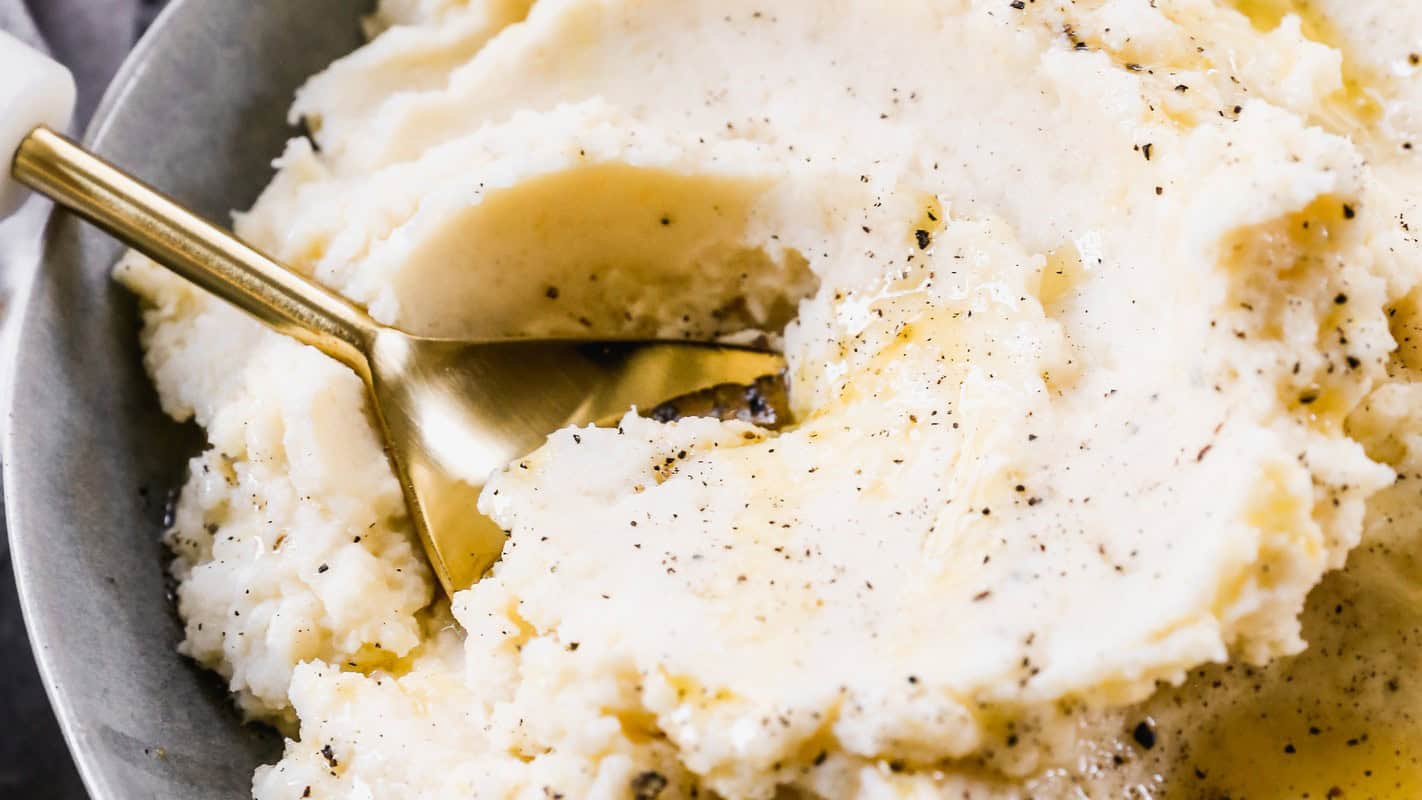
Potatoes need more seasoning than you might think. Along with salt and pepper, our recipe adds 1 teaspoon of chicken bouillon paste for savory depth (granulated bouillon or a little garlic powder works too) and ¼ cup of sour cream for a gentle tang.
Always taste after mashing and adjust. A little more salt, pepper, or milk at the end is what takes them from fine to the dish everyone goes back for. Spoon our Turkey Gravy over the top and you’re set.
Making them ahead without extra milk
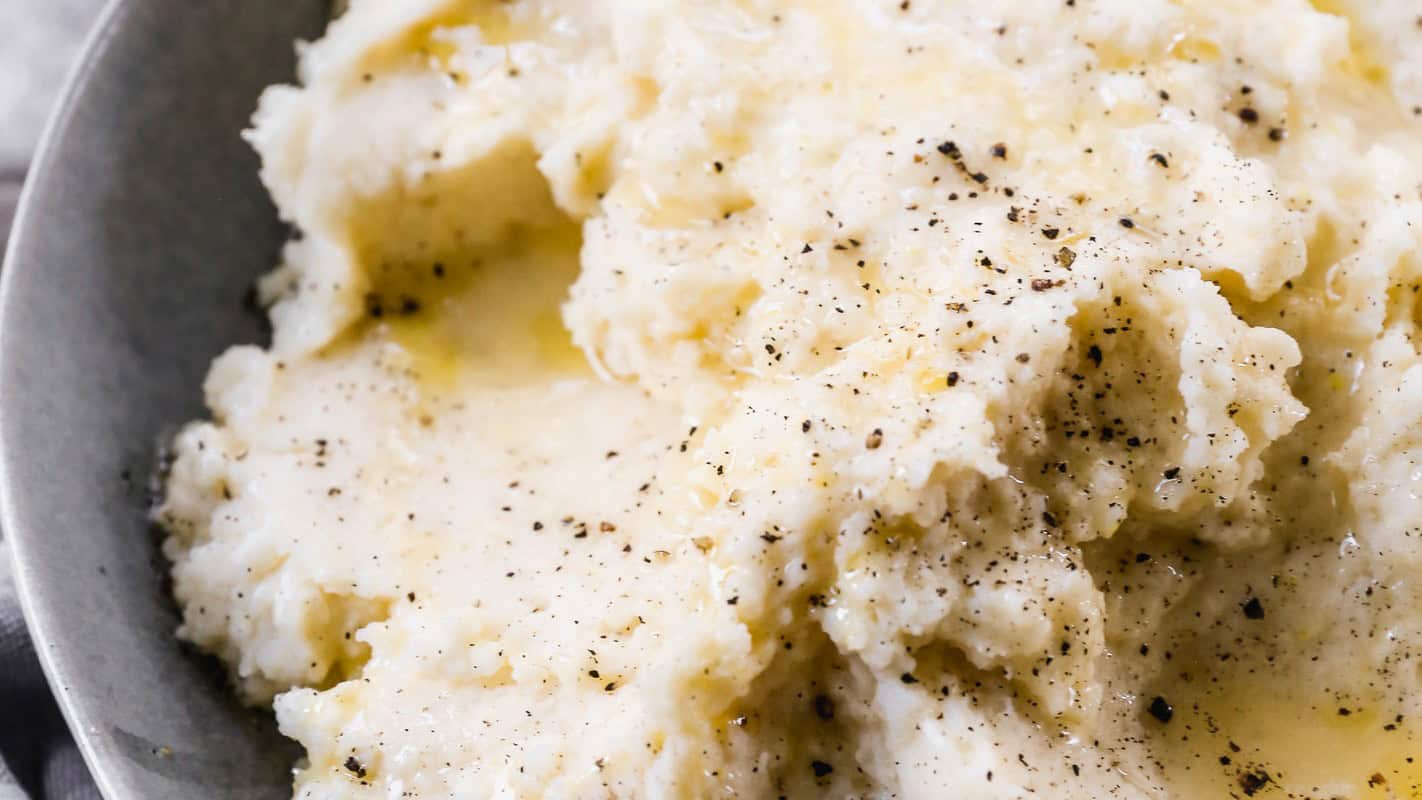
Mashed potatoes are one of the best sides to make ahead, but they keep absorbing moisture as they sit. If you make them 1 to 2 days early, stir in a little extra milk so they’re very soft before they go in the fridge. Spoon them into a casserole dish or large container and cover.
On the big day, take them out about an hour before baking, taste, and add more seasoning or milk if needed. Bake covered at 350°F for 20 to 30 minutes until warm, or reheat them on the stove or in the microwave. Find more dishes to prep early in our Make Ahead Thanksgiving Recipes.
Get these six things right and you’ll have a bowl of creamy homemade mashed potatoes that holds its own next to anything on the table. Mashed potatoes aren’t just for holidays, either. Serve them with Meatloaf, Slow Cooker Pot Roast, or Swedish Meatballs, or spread them over our Cottage Pie.


 Add us as a trusted site on Google
Follow Me